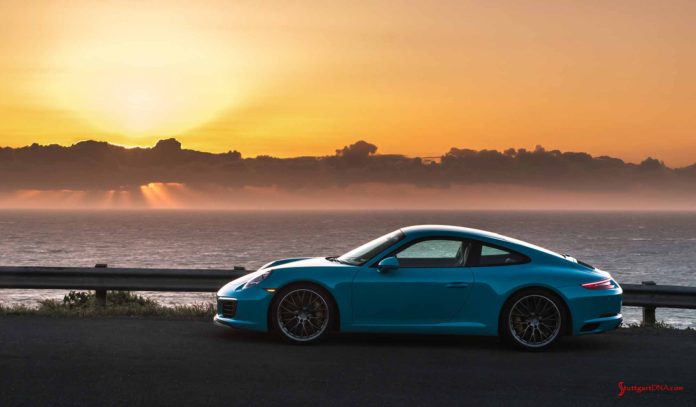
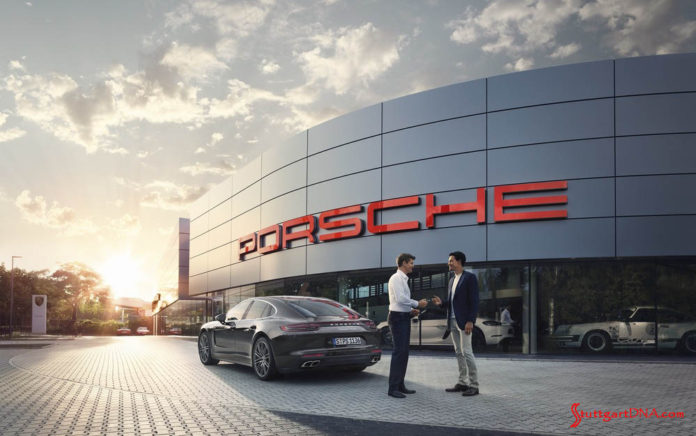
How buying a new Porsche can save you money could be easier than you think. It’s just a mandatory matter of discretionary options, options, options.
Essentially, just the act itself of buying a new Porsche can save you money — or so purports an unattributed article in Excellence magazine’s 2017-2018 Edition of its Porsche Buyer’s Guide.
Is a New Porsche Really within Your Budget?
Actual Out-of-Pocket Cost vs. Depreciation Cost
Such a claim of saving money by buying a new Porsche may seem counter-intuitive. After all, think of the appreciable amount of depreciation incurred just as soon as any new car pulls out of the dealership’s driveway. (See my article on buying a CPO Porsche for further details on depreciation, for example.)
Nonetheless, the article – titled “Saving Money Buying a New Porsche” — makes a compelling case. In short, the article demonstrates how buying a new Porsche can in fact save you money. (You can access it by clicking here to get the magazine’s Porsche Buyer’s Guide.) It also presents a second scenario of custom-tailoring your ideal Porsche for track days.
How High the Cost of Options?
It’s no secret that Porsche’s myriad options result in myriad revenue streams. Purchasing such options have augmented the company’s bottom line virtually ever since the fledgling design firm moved from Gmünd back to Stuttgart shortly after WWII.
In a nutshell, Excellence article’s thesis argument is that the base price of any new Porsche is relatively within reason — but the final sticker price has skyrocketed into the stratosphere.
If you don’t believe me, check your blood pressure after studying various stickers at your local dealership. This is because of all of the tacked-on options seen on each loaded vehicle in any given dealer’s on-lot inventory.
According to Excellence, here’s the antidote:
Select the model of your choosing with the base price that comfortably fits within your budget
Come to a decision on the bare-minimum choice of options that you desire, and
Order that personally optioned and now-within-budget Porsche of your dreams from your neighborhood authorized Porsche dealer
Porsche Germany Factory Delivery: The Porsche European Delivery Program
Furthermore, here’s an awesome “option” unto itself: With all the money you’ll be saving by eliminating any undesired vehicle options, the article suggests that you should take advantage of those substantial savings by taking delivery of your custom-built Porsche in Germany!
This can be done through the Porsche European Delivery Program at the factories in Germany, in either Stuttgart (i.e., Zuffenhausen, starting in 2018) or Leipzig.
Next, cast off on the dreamiest vacation of a lifetime — driving your brand-spanking-new Porsche across Europe. Then, once back home, you can relish the delightful anticipation of taking possession of your personally-broken-in bespoke Porsche after it’s shipped back to your local dealership in the States or in Canada.
(If you live outside of these nation-states, check with your local dealership to see if the Porsche European Delivery Program is available to you, and/or find your country’s Porsche website by clicking on the “country website” link in the second paragraph below.)
But first you have to set out on your quest by accessing Porsche Cars North America’s excellent Porsche Car Configurator on its website.
Any of Porsche’s other websites around the globe will have the Porsche Car Configurator; click here to access the Porsche worldwide website locator to find the Porsche website of the country of your choosing, in your region and language.
The Configurator will not only allow you to embark on your quest by configuring your exact chosen model. It will also enable you to familiarize yourself with all of the available options you don’t want – and, more important, with all of the options that you definitely can’t live without to equip your dream Porsche.
Read the Original Article and Sub-Article for Further Study
In the LEAVE A REPLY section at the bottom of this page, please post your commentsnow about this article.
Let us know your impressions, your experiences in searching for a Porsche to purchase and perhaps any experiences — very satisfying or horrendous — in finding and buying that Porsche.
Start the conversation, or join in on the conversation, now by leaving a reply.
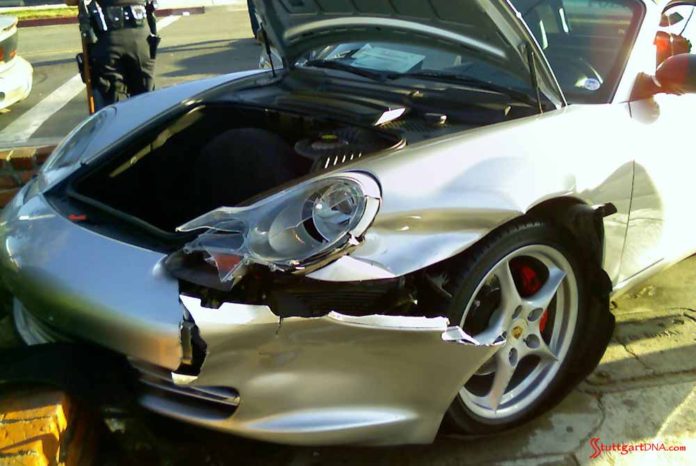
How to choose the best car insurance is the question. You must confront that crucial query head on in pursuit of your own best interest.
If you don’t, you could find yourself in deep doo-doo in the event of a declared unrecoverable theft or declared collision total loss of your exotic car, classic car, collector car or expensive sports car.
How to Choose the Best Car Insurance? Agreed Value, Actual Cash Value or Stated Amount?
Like all car guys and car gals out there, I can relate to the blinding passion that sometimes consumes us all when we at long last snag that elusive car of our dreams.
Among other things, that dream-car obsession can also blind us to good ol’ common sense about taking the right actions to protect that vehicle. More important, it tends to stupefy us and our ability to think rationally about fully protecting our financial interests.
Thus that dream-car obsession blunts our thought processes like going on a bender so that, more often than not, we fail to ask ourselves that critical question: How to choose the best car insurance?
In short, we all need to properly and fully bullet-proof our financial interest when it comes to our precious collector automobiles in the catastrophic event of a total loss.
StuttgartDNA Sidebar:
Total Loss can and should be defined as the following language illustrates:
The subject vehicle of a claim is declared a total loss when the appraised damage is declared to be rendered “irreparable,” (at least) or when the repair expenditures exceed a pre-determined percentage (i.e., the standard industry average of about 80 percent, give or take) of the insured value of the vehicle (at most).
How to Choose the Best Car Insurance: Introduction to Exotic Car, Classic Car, Collector Car and Sports Car Insurance
I know, I know. Talking about insurance is excruciatingly dull stuff – even less thrilling than watching proverbial paint dry, for sure. Definitely not my favorite subject matter either. It’s the only way to figure out how to choose the best car insurance.
But I want to help you get the most bang for your buck in terms of financially protecting your Porsche or any other car you desire. So, yes, talking insurance is a must.
Together let’s glean how to choose the best car insurance — i.e., how you can obtain the proper insurance coverage — for your cherished exotic car, classic car, collector car or sports car or even your high-end daily driver, whether it’s a Porsche or any other premium marque of your choice.
I’ll do my best in plain, easily digestible English to explain both the major and finer points of how to choose the best car insurance. And I’ll do my best to simplify the subject matter — hopefully without becoming simplistic in my discourse.
First we’ll start with the generalities if that’s all you want to take away from this article on the insipid subject of automobile car insurance. But then, if you need more detail, we’ll drill down further to some of the minutiae of classic car insurance so that you can figure out how to choose the best car insurance.
The Trilogy of Car Insurance
As you’ve probably gathered by now from the start of this article, the three types of varying protective-coverage flavors are “Agreed Value,” “Actual Cash Value” and “Stated Amount.”
But I’ll cut directly to the chase: In most if not all cases of figuring out how to choose the best car insurance, you want to make every effort to acquire an insurance policy that covers your precious vehicular asset with the “Agreed Value” form of coverage.
Why?
We’ll get to that momentarily. But first let’s explore why you should avoid the other forms of coverage and thus opt instead for “Agreed Value.” Here’s why:
“Actual Cash Value”
Probably the most common form of car insurance is Actual Cash Value. This is the type of policy that most of us carry on all of our daily drivers. All of the major insurance companies provide this type. They insure the thousands upon thousands of new cars that most of us buy each and every year.
In short, your vehicle is valued by your insurance company atthetimeofloss. This valuation is a depreciated amount predicated on the make, model, age, condition and options of your automobile. It is calculated by commencing with what your vehicle had cost you bought new, then deducting percentages against each year of your vehicle’s age. In addition, further deductions are assessed for anticipated “wear and tear.”
So, in an Actual Cash Value policy it’s not stipulated in advance what amount the insured (that’s you) will receive. In contrast, an Agreed Value policy by definition indeed specifies this amount at the time you purchase your policy.
In other words, the Actual Cash Value is what your vehicle is worth in a cash amount just moments before you suffer your heartbreaking collision or theft.
After your accident, your insurance company will send one of its adjustors out to the storage yard or facility or wherever your car is in the meanwhile sequestered. The claims adjustor will evaluate the damage, employ the valuation research sources of choice, and thus determine the final claims settlement offer to present to you.
Chances are, it won’t come anywhere close to what you had hoped for. If the gulf is extremely too wide for your liking, then you may be forced to engage the services of a lawyer or mediator to reduce that vast difference to a resolution.
However, you may be barred from hiring an attorney. Your Actual Cash Value policy may stipulate that you must resort to arbitration as your only recourse to rectifying your unfortunate plight.
Another risk you incur is that your insurance settlement may end up being less in value that the balance amount of your still-outstanding loan – yet another major gap in your coverage.
In any case, getting into an accident with an Actual Cash Value policy is no fun. Instead, it’s just one big headache after another – especially if your sweet motorcar is a classic or collectible car or an exotic automobile or a sports car. It’s definitely not how to choose the best car insurance.
“Stated Value” or “Stated Amount”
A Stated Value or Stated Amount insurance policy specifies the insuring of your vehicle for less than its true value or worth. In exchange for this hefty concession – oh, goodie! – you get to insure your car at a not-at-all-proportional, slightly lower premium.
Bottom line, Stated Value or Stated Amount policies determine how much premium you, the insured, pays – NOT how much you get paid in the event of a vehicular loss.
In essence, then, the Stated Value concept provides your insurance company with the loophole which allows them to take the fallback position of settling with you for – wait for it – pennies on the dollar as follows:
The insurance company will pay the lesser of:
The Stated Amount or
The cost to repair the covered vehicle at an amount not to exceed the “Stated Amount” [oh boy,here it comes. . .] or
The ever-depreciating “Actual Cash Value” of your automobile
Ta-da!
So, a Stated Value or Stated Amount policy is little more than an Actual Cash Value policy that sets an upward ceiling limit on how much your insurance company will pay out on your claim.
Worst of all is the fact that this type of policy gives the insurance company the wherewithal to depreciate your vehicle’s value and deduct the amount further south of that value. In short, your settlement is limited most likely to your car’s Cash Value – which will probably be lower than your policy’s Stated Value. Again, this also is not how to choose the best car insurance.
“Agreed Value” or “Agreed Amount”
So as initially alluded to above right off the bat, here’s why you should – no, why you must – land an Agreed Value (aka Agreed Amount) policy for your exotic car, classic car, collector car or sports car:
Agreed Value is the only insurance coverage that guarantees – in writing – that you’ll receive the mutually agreeable specified amount stipulated in your insurance agreement in the event that your automobile is totaled or stolen within the period of your policy.
For you, the critical factor of an Agreed Value or Agreed Amount policy is to settle on a value that you believe your vehicle is worth. This amount must be a mutually-agreed-upon value that your insurance company approves and agrees to cast in stone in the language of your policy at the time of its writing and purchase.
Aaah, now this is definitely the starting point of how to choose the best car insurance.
[For more information on settling on an Agreed Value for your automobile, please see the StuttgartDNA Tip below titled “Setting the value of your vehicle.”]
How to Choose the Best Car Insurance: The Essentials of Agreed Value
Origins of Agreed Value
Grundy Insurance founder James A. Grundy, Sr., is credited with originating Agreed Value policy-writing way back in 1947. Mr. Grundy began selling these newfangled policies to fellow car guys and buddies in hopes of prompting them as to how to choose the best car insurance for their collector and classic cars.
His friends needed a way to protect their collector cars and cover their restoration costs. These collectors and gearheads also wanted to somehow indemnify the appreciating values of their classic and collector vehicles.
Since then, collector- and classic-car insurance companies have sprouted up over the years to fill the niche and provide this service to the demands of an ever-expanding market.
One of our fellow members of the Porsche Club of America, the late Harold “Holly” Leland Bromberg, was another major player in the field of Agreed Value automobile insurance. After moving to Fresno, California, in the late 1970s, Holly pursued Agreed Value insurance, covering limited-use collectible automobiles.
Mr. Bromberg then founded and operated Leland West Insurance Brokers., Inc., which still provides Agreed Value insurance. As a PCA member, he concentrated on writing such advantageous AV policies for his fellow PCA members. To this day in the wake of his untimely passing, his company enjoys full endorsement from the Porsche Club of America.
The Agreed Value of Your Vehicle
This Agreed Value is the amount that you and your insurance company mutually agree upon once you decide to purchase your policy.
You would be very prudent to study the language of your prospective policy beforehand. Check the Physical Damage portion to make sure that it reads something to the following effect: “In the event of a total loss or theft, we, the insurer, will pay the Agreed Value of the insured vehicle….”
Plain and simple, easy peasy. If you don’t find very similar language in your prospective policy, find another insurance company.
And if the policy language says anything like, “Insurer will pay the Actual Cash Value or the Stated Value, whichever is less,” don’t walk — run like hell away from that deal.
So, now, I hope you’re starting to get the hang of how to choose the best car insurance.
StuttgartDNA Tip:
Setting the value of your vehicle
Value your vehicle under your Agreed Value policy as closely as possible to its true worth as determined through your research, homework and due diligence.
Because underwriters want to insure your vehicle for its true market value and your investment in that vehicle, your accurate stated worth of the car will ensure that you recover your due value in case of catastrophic events visited upon that vehicle.
The following websites are examples of resources with tools to value your car(s), but this is by no means an exhaustive list (and the listees are not endorsed nor sanctioned by StuttgartDNA, but are instead included here for informational and illustrative purposes only):
The dollar value of “Agreed Amount” stipulated in your policy can be changed by endorsement. This is a good thing for you.
You should remain proactive over each term of your policy with regard to that mutually agreed upon Agreed Value. Before policy renewal each year, the “Agreed Amount” should be changed, if necessary, to reflect the potentially appreciated current market value of your prized automobile(s).
Drilling down further, you should adjust the Agreed Value not only annually pursuant to renewal, but also during mid-policy. You should do this so as to align the true value periodically with the various stages of your automobile’s restoration, for example, and the actual incremental appreciated value of your vehicle over time.
This not only helps you when it comes to how to choose the best car insurance, but also keeps you in play with the best car insurance.
Negotiating and Landing Your Ideal Agreed-Value Policy
Obtaining an Agreed Value policy for your mutually agreeable value is relatively easy. But there are a few hoops through which you may be forced to jump. Additionally, there are due-diligence steps you should also take – as Mom would say, “For your own good.”
A lot of the topics — those aforementioned hoops — listed below can be overridden, so you won’t have to comply with them as described. But remember that it will come at a price — i.e., at an incremental increase in your premium for the override of each one (e.g., a daily driver, limited mileage, restricted use, garage storage, etc.).
To help you navigate through these topics, here are the clickable suggested steps you need to take to help you figure out how to choose the best car insurance:
My listing this here is stating the obvious. It goes without saying that a reckless driving record is going to definitely hamper your ability to acquire a coveted reasonably priced AV policy for your classic, collectible or sports-car machine.
If you have a bordering-on-criminal problematic driving record, I have no plausible, rational methods for you as to how to choose the best car insurance with that dark cloud hanging over you.
You should be ready, willing and able to document your vehicle, its restoration and its claimed value for which you are applying for Agreed Value insurance. This is one of the keys to assist you in how to choose the best car insurance.
For example, if you are or have been restoring your car, be sure to document that restoration with before-and-after photographs and all receipts and documentation that apply.
You can’t have too many photos or supporting documentation to acquire insurance for your vehicular baby.
Be sure to choose an insurance company that is authorized by your state’s Insurance Department. Also make sure that the carrier provides Agree Value insurance approved by your state’s Insurance Department.
This, of course, isn’t an insurance-company requirement. Instead, it is a due-diligence requirement on your part to research on your own. This is, rather, a suggestion for you to CYA, if you know what I mean.
Such “paranoia” may not be necessary when it comes to the large, well-known carriers. But if you’re thinking about smaller, lesser-known companies, then you should follow through in taking this advice.
How to get started on your search for insurance companies
Check out our Porsche Resources Directory for our listed insurance companies by clicking on the following link to help you determine how to choose the best car insurance:
Choose an insurance company with an A.M. Best rating of A or better
Choose only from among companies that have earned A, A+ or A++ ratings from global insurance-rating firm A.M. Best. This requirement is yours to determine. The insurance company doesn’t require this. You must determine this through your due diligence in your research which is in your own best interest.
What is the significance of an A rating or better? It means that the carrier or underwriter bearing such a rating possesses strong financial stability and strength as well as solid creditworthiness. It also indicates a great track record of paying out past claims. An A stands for “excellent” – or better if the A has a + or ++ after it.
Alfred M. Best founded the firm in 1899. Ever since, the company has blossomed into the oldest and most respected ratings provider focusing on insurers and the insurance industry in over 90 countries across the world through its A.M. Best Rating Services, Inc.
If you want to be proactive and obtain an insurance carrier’s and/or underwriter’s rating on your own, click here to go to A.M. Best’s rating page.
But before you can use the service, you must undergo New Member Registration by clicking on “Sign Up” in the upper-right-hand corner any webpage on the website. Start the registration process by entering your email address and creating a password.
Then, once you log in, you’ll be good to go to access the Ratings page. Click here again to access the rating page once more if necessary and then enter an insurance company’s or underwriter’s name in the blue search box entitled “Search for a Best Rating.” Then click on the green-shaded “Go” button to obtain the desired rating.
Finally, remember that a rating of A or better goes not only for the insurance carrier you’re thinking of signing up with, but also for the underwriting companies covering claims under that insurance company’s policy. Don’t be shy about asking the prospective insurance companies whom their claims underwriters are as well as what their underwriters’ A.M. Best ratings are.
Choose only one insurance agent, if at all possible
Using only one insurance agent isn’t a requirement for obtaining an AV insurance policy. But it will ultimately make your life and management of any future claims so much less stressful. The crucial point here is that you will have to deal with only one point of contact to manage all of your insurance policies and claims.
Also be sure to screen that agent to determine if he or she has an intimate knowledge of, as well as actual experience with, the world and passionate hobby of collecting classic, exotic and collector cars.
That agent should also have an established and firm relationship and rapport with the company that will be underwriting your AV policy. Such a relationship will ensure that your agent has the authority and clout to help you settle your claim as expeditiously as possible to meet and even exceed all of your expectations.
Many companies require that you possess a co-insured daily driver. The idea is that you presumably will drive that vehicle for the greater balance of time, as opposed to the vehicle to be insured at Agreed Value.
In other words, insurance companies that provide Agreed Value insurance want to know that you have another car to drive to work and for any other daily use – so that your Agreed Value vehicle will be driven for the far lesser balance of time.
Most Agreed Value companies and their policies limit your collector-car’s annual mileage to a pre-determined amount. However, if you do your due diligence, you can find a select few insurance companies that offer unlimited mileage under their AV policies, though it may (or may not) cost you a slight increase in premium.
Not unlike limited mileage discussed above, many insurance companies limit your driving privileges to only pleasure driving of your AV automobile. As alluded to above, your coverage may not apply if you have an accident on your way to work, or in the course of running errands. Consequently, you may be restricted to using your AV automobile only for car-club events, car shows or concours d’elegance competitions, among other similar hobby-related activities and events.
Yet again, though, shop around for those companies that are a little more lenient in this area. They’re out there, but you have to ferret them out.
Prove you have an enclosed garage required for storage
It stands to reason that you should properly store your classic automobile or cherished sports car. Most if not all AV insurance companies feel the same way.
So my advice to you is to take plenty of photographs of your garage and your automobile stored in that garage. Have these photos available at your fingertips in digital JPEG format if and when any of your prospective companies request them.
Insurance companies providing Agreed Value insurance policies prefer matching liability coverage limits – and if they don’t, you should.
Specifically, both liability amounts and uninsured-motorist / underinsured-motorist limits on your daily driver(s) should match the coverage limits on your Agreed Value sports-car or collector-car policy.
That is, bodily-injury liability limits as well as uninsured-motorist / underinsured-motorist limits should be the same amount across all vehicular policies.
So what happens if, instead, you happen to have varying coverage amounts on any or all of your other vehicles? Then your attorney – should you be in the most unenviable position to need one – can work a deal to exhaust one policy amount and then tap into and exhaust the next policy amounts to cover the litigation monetary value for which you’re be sued.
Obviously, this potentially nightmarish scenario is a total hassle – not to mention increasingly costly because the meter keeps running on your legal fees during these mismatched shenanigans. Setting matching limits can prevent all of this.
By the same token, it’s best to set identical uninsured-motorist / underinsured-motorist limits to the amounts of your bodily-injury limits to become fully covered and to eliminate any coverage gaps.
But bear in mind that there’s nothing wrong with your sports-car or collector-car policy holding higher limits than your daily driver, however – just as long as it is on par with or higher than the limits set on your daily-driver policy.
Medical payments limits are not as critical, so the limits may or may not have to match, depending on the policies on offer.
Specify customized coverages that you may feel are essential
Most claims are not for total losses. Rather, they’re for collisions that involve the repair of your automobile for damage that falls under your Agreed Value coverage.
Therefore, you should consider declaring the following, just as a few examples:
Covering spare parts
Covering trip interruption
Getting reimbursed for towing and labor costs and expenses
Getting reimbursed for any auto-show medical expenses incurred if you happen to fall ill or get injured at a car show at which you are displaying your prized automotive possession
These are some of the possible customized coverages that you could declare on your policy. If you can think of any others, be sure to discuss them with the agent representing your prospective policy.
Get additional extra coverages if you feel you need it
So you’re narrowing down your shortlist of the most attractive Agreed Value carriers for your AV physical damage coverage. Now it’s time to delve deeper to compare any available extra coverages.
For example, you can include such things on your policy as audio equipment, wheels, and even luggage that was designed to match your automobile, or any other special accessories that are of exceptional value to you.
So make sure to itemize any such special items when negotiating your policy. The additional costs applied to your premium may end up being more than worth it.
Establish the right to select the collision shop of your choice
You may have to pay extra for it, but make sure to declare reserving the right to choose your own auto-collision center. Or, this right may be a built-in feature of some policies. Either way, look into it for sure.
This could be critical in taking possession of your collector car as one that comes out of the collision center like or better than new – or like an inferior shadow of its former self that will never be the same again.
If you own a Porsche, definitely make sure that you are able to choose a shop of your own selection. Porsche maintains the Porsche Approved Collision Center Program – its own program of approving collision centers that conform to Porsche’s very high repair standards.
It’s imperative that you can choose one of these Porsche-approved shops to put your sweet baby Porsche back together again at least as good as new. The best way to make this happen is to take your baby to a Porsche-approved collision center.
In this day and age of high-tech, cutting-edge Porsche electronic systems and various exotic metal, alloy, aluminum and composite body-panel and chassis components, you’ll at least have a fighting chance at one of these approved centers.
Obtaining only OEM parts to repair your automobile is also critical. Although, it may be easier than the immediately aforementioned choice-of-shop issue to get this feature placed in your policy as a freebie.
See, insurance companies prefer dodging exposure to such sure-to-lose litigation. Many an insurance carrier in the past has been on the losing end of such liability battles. What gets them into trouble is requiring installation of aftermarket parts that, by definition, are inferior in quality to OEM parts.
So obtaining OEM parts during your vehicle’s time in the shop may be a non-issue – but make sure that your policy stipulates OEM parts to be on the safe side.
There are other insurance issues besides the ones above. These other issues are lesser known and more detailed in their definition and scope. So I’ll do my best to discuss them with you and elaborate on them as clearly as possible for you without getting into the weeds.
So when it comes to how to choose the best car insurance, the finer points of classic-car insurance are as follows:
In the lingo of Wikipedia’s legalese, “diminution of value” is defined as “… [The] measure of value lost due to a circumstance or set of circumstances that caused the loss. Specifically, it measures the value of something before and after the causative act or omission creating the lost value in order to calculate compensatory damages.”
. . . Zzzzzzzz . . .
Simply put, “diminution of value” for our intents and purposes equates to the difference between your sports-car or collector automobile’s value before an accident and its value after collision repairs or after its recovery after a theft.
This represents the amount you will be compensated by your insurance company — provided that you were pro-active enough at the time of the crafting and drafting of your prospective policy to make sure that you had such a crucial provision stipulated in your policy.
Key here is diminution of value as it pertains to your vehicle’s originality. This can be best described as the “fine-arts value” of your car in the sense that such originality cannot be replicated through any efforts or amount of repair or restoration.
Examples of cases when your automobile’s value can and will diminish include, but are not limited to, the following:
Vehicles that have been customized or restored by renowned, recognized masters who are now deceased (e.g., the incomparable Boyd Coddington, et. al.) and therefore can no longer bring your damaged vehicle back to its original state of being
Your automobile’s original paint and/or original bodywork have been irreparably destroyed
Parts that have matching-number IDs that are destroyed and therefore have to be replaced, which will substantially diminish the value of your prized vehicle
Significant mileage added to a stolen, and then recovered, highly restored or near-perfect original vehicle could radically diminish the value of that super-low-mileage vehicle
The problem with filing a diminution-of-value claim without having the coverage to begin with is that the weighty onus of proof is entirely yours to bear. So definitely keep diminution of value in mind while you’re considering how to choose the best car insurance.
Part and parcel of your guaranteed indemnity against inflation and market appreciation is found in securing Agreed Value coverage.
You can actively participate in guarding against this contingency by increasing the Agreed Value listed on your policy. This is done by securing an endorsement to that effect.
However, the good news is that, if you choose the right insurance company and policy, this adjustment will occur automatically without any input on your part. Now that’s using your noggin when it comes down to how to choose the best car insurance.
Such an inflation guard will normally establish a value increase on your insured vehicle by typically 2 percent each quarter, up to maximum coverage of approximately 8 percent each year.
But this, along with most if not all of the aforementioned options, is dependent on you pro-active due diligence in pursuing the inclusion of these aspects in your policy.
This, of course, as you may recall, was discussed briefly in the StuttgartDNA Tip at the top of this article. So let’s flesh out the concept a little more here.
“Total loss” as defined above may be declared when damage is calculated to be irreparable or whenever estimated costs to repair the vehicle exceeds a predetermined percentage of the automobile’s Agreed Value. This percentage usually hovers around 80 percent.
Among other issues besides restoring the safety of your vehicle, the declaration of total loss can also result from such factors as the complete unavailability of original replacement parts. Another related factor could be the prohibitive cost to fabricate such parts.
Both scenarios in turn can dramatically escalate the repair cost to exceed the car above and beyond its insured value.
There is one proactive measure you can pursue to mitigate the dire prospect of total loss: Get your hands on a policy that provides flexibility in adjusting the Agreed Value of your automobile on a yearly basis before any such comparable loss occurs.
Ideally, you should seek out a policy that allows a mutually agreeable increase in value at any time it may be necessary. This could become a critical factor in the event that you are, for example, in the process of restoration and your vehicle thus appreciates over the course of that restoration.
Hopefully, the insurance company that you choose will have well-qualified damage appraisers. Such appraisers should come from a background as participants themselves in the collector-car hobby.
Thus your particular appraiser would probably have the superior ability to accurately and fairly assess the value of the damage to your automobile — and they should be well prepared to be able to determine whether or not your car should be deemed a total loss.
If you’ve chosen the right insurance company, then perhaps that company can navigate you through your possible options should you indeed suffer a total loss (e.g., obtain a salvage title as described in the StuttgartDNA Tip directly below).
As a last resort, you may be able to make the best of your total loss by way of the salvage title:
Your cherished-more-than-life-itself classic car, collector car or sports car has just been declared a total loss. You’re heartbroken. Utterly devastated beyond description.
What will you do now? Is there anything you can do but resign yourself to your wretched fate?
There may be a means of consolation, a type of answer to your prayers, so to speak. It’s called accepting a salvage title on your totaled automobile, and then buying it back.
But definitely be on your toes in this pursuit, because navigating the rocky shoals and waters of salvage titles could be a pretty tricky endeavor fraught with many perils. And salvage titles are in fact against the law in some states.
Alternatively, you could secure the original title if your insurance company agrees to work with you to declare your vehicle as simply a partial loss.
This is accomplished by crediting the buyback price from the cost of repairs to restore your automobile as close as possible to its original condition before the declaration of loss. But that’s a whole ‘nother kettle of fish that you should explore on your own.
In a nutshell, by going the route of the salvage title, you could retain your vehicle by buying it back to use as a parts car. But, of course, this depends in large measure on your particular situation and on the actual damage to your now-totaled automobile.
Ultimately, though, your “insurance” (pun intended) against having your vehicle declared a total loss and thus juggling the issue of whether or not to deal with a salvage title is securing the best Agreed Insurance policy in your power.
Yet again, it comes down to how to choose the best car insurance.
Coverage Gaps
Coverage gaps can and will occur if you’re not on your toes.
For example, what if the at-fault buffoon who collides with your cherished sports car or classic automobile does not have the necessary coverage to pony up the cost of repairing your vehicle?
You should know by now from the discussions above that the solution to this problem is having the proper Agreed Value coverage. Such coverage also guards against the dreaded possibility of receiving a settlement under Actual Cash Value coverage that wouldn’t cover the cost of your outstanding loan balance on your totaled automobile.
Then there is the scenario that your car could enjoy the enviable prospect of dramatically escalating in appreciation. What would you do if you found yourself in such an enviable position in the event that you didn’t take the recommended action of increasing your coverage?
The answer is, seek out those Agreed Value insurance companies that pay out in excess of 100 percent of your stated replacement value. Yes, such companies do exist — some even paying as much as 150 percent of that stated value. Once again, you just have to ferret them out.
As alluded to above under “Negotiating and Landing Your Ideal Agreed-Value Policy,” some of the steps you can take to plug up any additional gaps are as follows:
Make sure your coverages for Bodily Injury Liability limits on your daily driver and your classic car(s) match in value as closely as possible – including Uninsured-Motorist / Underinsured-Motorist coverage limits
Strive to have one insurance agent to handle all of your policies and claims
Specify customized or additional coverages if you feel you need it
This post on how to choose the best car insurance is by no means intended to represent the be-all and end-all of classic-car insurance discourse. You should consult insurance professionals and/or a legal professionals who can inform you of the full scope of details and repercussions involving the complicated intricacies of Agreed Value insurance.
Consequently, my foregoing discussion with you is intended solely and exclusively as a primer on Agreed Value insurance to enlighten you and guide you on the basics, thus steering you in the right direction in what your future due diligence and research should entail.
Well, I hope I have indeed enlightened you much more than confused you with the dull, dry, comatose-inducing ins and outs of classic-car insurance. Somebody had to do it. . . ! Happy hunting for that ideal Agreed Value policy that will most optimally cover your automotive pride and joy — now that you know how to choose the best car insurance.
In the “LEAVE A REPLY” section at the bottom of this page, please share your commentsnow about this post to assist other guests in learning how to choose the best car insurance and in learning the ropes of Agreed Value insurance.
Let us know your impressions, your experiences in getting your own insurance coverage and perhaps any experiences — very satisfying or horrendous — in settling claims on your Agreed Value policy.
Start the conversation now on your own efforts in dealing with the question of how to choose the best car insurance, or join in on a conversation, by leaving a reply.
Your input is highly valued by us and much appreciated!
Porsche launches Porsche Finder, its pre-owned vehicle search platform. Porsche Finder enables prospective customers to search all 192 USA Porsche dealerships across the country from the cozy comfort of home during these sheltering times.
This is one of the objectives in Porsche’s fast-tracking of its e-commerce strategy to give customers greater and greater access to the Porsche brand. Launched by Porsche Cars North America (PCNA) and developed by Porsche Digital, Porsche Finder enables customers at home the rapid ability to zero in on the exact vehicle they desire to buy.
For those of you who can’t wait (like myself who is eagerly searching for a Macan daily driver to be a garage mate beside my current Porsche sports car), Porsche Finder is now up and running at: https://finder.porsche.com/us/en_US/
The advantage of Porsche Finder is its optimized search filters that enable the end-user to drill down further than ever before using the following parameters, for example:
Exterior colors (including cabriolet roof colors)
Interior colors
Inventory search without the cumbersome need to enter a zip code
Model and generation
Pricing options
Vehicle equipment and packages
Obviously proud of the realization of this latest facet of Porsche’s e-commerce strategy, President and CEO of PCNA Klaus Zellmer declared, “Now is the time to put our foot on the accelerator to make the Porsche digital experience as stellar as our cars.
“Providing seamless access to our products is a top priority in our existing e-commerce strategy, with the goal of creating a one-stop shop for new and pre-owned vehicle search and purchase, which will follow down the road. For now, the new Porsche Finder platform for pre-owned vehicles will enhance the customer experience and greatly benefit our dealer partners.”
As part of the porscheusa.com website, Porsche Finder is optimized to enable excellent search results on both tablet and mobile devices. Porsche was wise to optimize searches on such devices because consumer research data reveal that greater than 50 percent of all search users perform vehicle searches on mobile devices.
Finally, yet another aspect of Porsche’s e-commerce strategy is known as “Porsche at Your Service” (PAYS). This takes the shop-from-home experience one step further by making customer access even easier. PAYS opens new avenues so that a customer can choose home-delivery options to put that dream Porsche in one’s driveway as unexposed as possible once it has been chosen and purchased online.
Let us know what you think of these Porsche efforts by contributing your Comments below. We greatly appreciate your input.
Please share your COMMENTS with everyone by scrolling down to the “LEAVE A REPLY” space below at the very bottom of this page. Your input is highly valued by us and much appreciated!
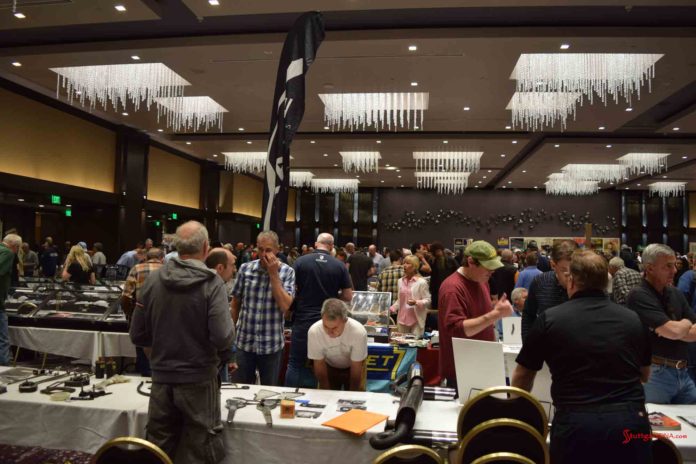
Porsche fans the world over look forward every year to the annual L.A. Lit Show. This internationally popular event focusing on the offerings and sales of all things Porsche is presented usually on every first Saturday of the month of March at the Airport Hilton in Los Angeles, California, USA. The Airport Hilton is adjacent to Los Angeles International Airport (LAX).
The name of the annual L.A. Lit Show is short for both the L.A. Lit and Toy Meet Show, as well as the L.A. Porsche and Vintage VW Literature, Toy & Memorabilia Meet Show.
As these alternate appellations suggest, shoppers can browse among tables and tables and tables laden with Porsche and VW literature, toys, and memorabilia – and so much, much more related mostly to the marque of Porsche and all of its vehicles.
In fact, there are so many goods, wares and trinkets presented yearly that the Show overflows into not only one but two ballrooms at the Airport Hilton. Vendors display all of their goodies from 7 a.m. for Early Bird hunters and gatherers, while the general public is admitted around 9 a.m.
StuttgartDNA Tip:
Get the right insurance for your Porsche
When shopping for insurance on your Porsche, make sure to do your homework on getting the best insurance for it — read our article on the subject by clicking on the following link:
The Show usually winds down around 1 or 2 or so in the afternoon. At that time, shoppers then head out to points mostly south to Orange County, where independent Porsche shops, vendors and re-sellers hold Open Houses for the annual L.A. Lit Show attendees in what is known at the L.A. Lit Weekend festivities. It has since become a longtime tradition.
Black “Big Boxster” Porsche Carrera GT at Callas Rennsport during the 2017 Porsche Lit Week. Credit: StuttgartDNAOne of the very-sad-to-see wrecking yards at Los Angeles Dismantler. Credit: Los Angeles DismantlerCarparc USA facade. Credit: StuttgartDNAThe Steve McQueen Le Mans Trilogy, 2016. By Nicolas Hunziker, Switzerland. Three original paintings, acrylic on canvas, 60 inches by 40 inches each. Commissioned by Chadwick McQueen and the Terry McQueen Testamentary Trust. List Prices: “Between Scenes” Painting No. 1, $75,000; “Just Like Jo” Painting No. 2, $75,000 (reserved); and “No More Waiting” Painting No. 3, $75,000.The 2017 Porsche LA Lit Meet main room, with some excellent Porsche-themed dioramas in f.g. Credit: StuttgartDNA
The annual L.A. Lit Show was conceived and started over three decades ago by PCAers and Porschephiles Prescott Kelley, Wayne Callaway and Jim Perrin. Now, though, it is operated under the auspices of venerable Stoddard NLA, one of the largest players in the global Porsche-specific restoration market. Stoddard NLA took over running of the show in 2017.
If you happen (or plan) to be in the neighborhood of Southern California, USA, during March of any year, you have to check out the annual L.A. Lit Show. I’ll see you there!
Porsche Cars North America (PCNA) recently reported its Porsche first-quarter 2020 USA retail sales. In recent memory, this is an unprecedented reporting move for Porsche AG and for PCNA.
PCNA used to report sales on a monthly basis, but not anymore. Porsche, Audi and Volkswagen (all under the Volkswagen corporate umbrella) have followed suit along with BMW, Fiat Chrysler, Ford, GM, and Mercedes. “All of the above” have since discontinued their monthly reporting.
Now on to PCNA’s first Quarter 1 2020 report:
As is the case with all of us, the COVID-9 Pandemic has taken its toll on Porsche sales, too. As a result, USA retail sales and deliveries suffered a year-on-year decline in the 2020 first quarter.
PCNA’s 192 independently owned and operated USA dealers delivered 11,994 new vehicles from January through March 2020 — a dramatic downturn of -20.2 percent compared to the same period of last year. In marked contrast, 2019 for Porsche was a record-setting year, culminating into a decade sustained growth.
PCNA’s President and CEO Klaus Zellmer had this to say about this troubling Pandemic: “PCNA has three clear priorities in these times: protecting the health of our staff, supporting the mobility needs of our customers, and helping our dealer partners remain vital economic contributors in their communities.”
Mr. Zellmer continued his declaration, “Amid near-term uncertainty, our goal is stability and assistance for all of our stakeholders. This will also prepare us to rebound all the more energetically when the time comes.”
Source: Porsche Cars North America
The disappointing news is that total Porsche car sales were off -16.4 percent for Q1 2020 vs. Q1 2019. Porsche SUV deliveries fell even more dramatically by -22.2 percent from Q1 2020 vs. Q1 2019.
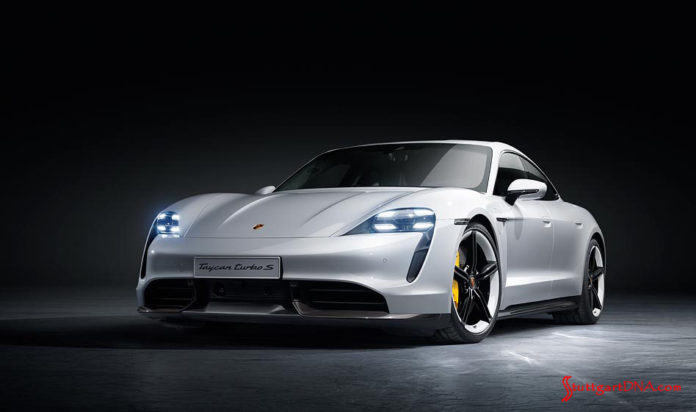
The big news despite all of the doom and gloom is the highly anticipated sales debut of the Taycan Turbo and Taycan Turbo S variants, Porsche’s first all-electric sports-car sedan. Porsche recorded Taycan sales of 221 units in this first quarter of 2020. More exciting news is that the Taycan 4S model will be released in the second quarter of 2020.
There was some growth, however. Porsche Approved Certified Pre-Owned (CPO) sales showed a modest increase of 1.08 percent year-over-year, with a total of 5,827 vehicles for January through March 2020.
Please refer to the accompanying chart above for details of all Porsche first-quarter 2020 USA retail sales.
Feel free to let us know what you think about the Porsche’s Q1 2020 sales during the Covid-19 Pandemic or about the Taycan and/or this post in general by contributing your comments below. We greatly appreciate your input.
Please share your COMMENTS with everyone by scrolling down to the “LEAVE A REPLY” space below at the very bottom of this page. Your input is highly valued by us and much appreciated!
PCNA recently unveiled its November 2019 Porsche USA sales numbers. They were substantial. This past November proved to be the strongest month in the history of Porsche Cars North America: Boasting units of 6,326 vehicles, USA sales surged by 11.5 percent over last year’s figures.
“Porsche is on track to close 2019 with our tenth year of consecutive growth in deliveries to U.S. customers and the eighth successive record year,” announced Klaus Zellmer, President and CEO of PCNA.
Mr. Zellmer’s confidence is not unfounded. This year’s record just shattered the all-time record set last November. Furthermore, total retail sales jumped 7 percent in the first 11 months in 2019, with deliveries of 56,835.
“Beyond our thrilling cars, Porsche Cars North America and our dealers are dedicated to providing an exciting customer experience that helps drive these results,” continued Mr. Zellmer.
Mr. Zellmer substantiated the assertion with the following: “This is the first year that we’ve won the top spot in three key J.D. Power studies — the Customer Service Index, the Sales Satisfaction Index, and the APEAL Study of automotive performance, execution and layout.”
Source: Porsche Cars North America
When we “look deep under the hood” at the numbers (see chart above), it is clear that, ironically, sales of Porsche SUVs drove these record-setting sales figures.
In fact, SUV deliveries outpaced Porsche sports-car sales by almost 2 to 1 last month. Year over year, SUV sales also surpassed sports-car sales by 37.4 percent.
Specifically, this November’s sales of the new-gen Cayenne grew by 52.4 percent over last November. Furthermore, year-over-year Cayenne retail growth skyrocketed some 87.4 percent.
The Macan demonstrated a much smaller increase, however: +17.6 percent this November over last year, with a year-over-year modest decline of -5.3 percent.
A new startling sales spike looms on the retail horizon. Initial anticipated sales of the new Taycan will more than likely soar in frenzied buying. Deliveries of the first all-electric Porsche land on our national shores later this month.
Sales of Porsche Approved Certified Pre-Owned (CPO) vehicles also improved once again. Units totaled 2,257 vehicles in November, an increase of 22.3 percent year-over-year.
Please share your COMMENTS with everyone by scrolling down to the “LEAVE A REPLY” space below at the very bottom of this page. Your input is highly valued by us and much appreciated!
October 2019 USA sales increased 13.1 percent compared to October 2018 sales figures, according to Porsche Cars North America, Inc. (PCNA). This amounts to 5,447 automobiles and SUVs, an increase of 630 vehicles — the highest monthly sales achievement witnessed so far this year.
Source: PCNA
Year-to-date retail sales at the end of October rose by 6.5 percent. Compared to last year, this represents retail deliveries of 50,509 units, an increase of 3,066 vehicles.
“I think our customers appreciate the range of model choices we offer, whether they are excited by the latest generation of our iconic 911 or an SUV with the heart of a sports car,” said Klaus Zellmer, President and CEO of PCNA.
Mr. Zellmer may be on to something here. In fact, customer opportunities will increase before the end of the year. He continued, “Adding the all-electric Taycan to our portfolio gives those customers even more options for Porsche thrills once we start deliveries late this year.”
The new eighth-generation 911 (i.e., 992-gen) recently landed in USA dealer showrooms. Thus, Porsche 911 sales in October skyrocketed some 65 percent. The Macan model line showed a healthy 19.2 percent increase, too.
However, other model sales except for the virtually flat Cayenne model line were down considerably (please see accompanying chart above). Yet Porsche still managed to score the aforementioned 13.1 percent rise, thanks in no small measure to those mammoth 911 sales, aided by the increased sales of the refreshed Macan.
Finally, Porsche Approved Certified Pre-Owned (CPO) sales in the USA rose 24.6 percent year-over-year, with total unit sales of 2,138 vehicles in October.
Please share your COMMENTS with everyone by scrolling down to the “LEAVE A REPLY” space below at the very bottom of this page. Your input is highly valued by us and much appreciated!
Porsche pulled out all the stops in pulling off the highly “energetic” world premiere of the Porsche Taycan. The Taycan is Porsche AG’s very first all-electric sports car. The Porsche Taycan first electric sports car world premiere launched on September 4, 2019.
Unprecedented Taycan Premiere on Three Continents
As an all-time first (and probably last), the unprecedented Porsche Taycan first electric sports car world premiere took place on three continents — simultaneously:
North America
Europe
Asia
Why these locations? The reasons are two-fold: (1) The three international venues epitomize the three biggest potential regional markets for the Taycan electric sports car and (2) all three sites are synonymous with the generation of sustainable energy:
Niagara Falls — on the American and Canadian border, for its awe-inspiring grandeur of hydropower
Neuhardenberg — in Germany, near Berlin, at a solar farm to exemplify solar power, and
Pingtan Island — in China, at a wind farm in Fujian Province, to call wind power to mind
At the Niagra Falls Premiere are Detlev von Platen, Member of the Executive Board, Sales and Marketing; Stefan Weckbach, Vice President Product Line Taycan; and Ivo van Hulten, Director Interior-Design, Style Porsche. (l-r). Credit: Porsche AGAt the Germany Premiere are Manfred Harrer Vice President Chassis Development; Oliver Blume, Chairman of the Executive Board of Porsche AG; and Michael Mauer, Vice President Style Porsche (l-r). Credit: Porsche AGAt the China Premiere are Peter Varga, Director Exterior Design – Style Porsche; Michael Steiner, Member of the Executive Board of Porsche AG – Research and Development; and Gernot Döllner, Vice President Product and Concept of Porsche AG (l-r). Credit: Porsche AG
Porsche handpicked these event settings for very good reason: They are ideal backdrops for the introduction of the Stuttgart auto manufacturer’s all-electric-powered four-door sports sedan to the world.
In this way, Porsche touted some of its main objectives for developing and producing the Taycan — sustainability and digitalization. At the time, all three events were livestreamed round the world.
So what is to make of these three synchronized international whoop-de-dos? The objective, of course, was to drive home the historic gravity of the moment — that this is Porsche AG’s maiden voyage into 21st century electric automotive mobility. This to all Porschephiles and non-Porschephiles alike is in no small measure a very big deal.
Introducing the world premiere in Berlin, Oliver Blume, Chairman of the Executive Board of Porsche AG, announced, “The Taycan links our heritage to the future. It carries forward the success story of our brand — a brand that has fascinated and thrilled people the world over for more than 70 years.”
Putting an even finer point on it, Mr. Blume pronounced, “This day marks the start of a new era.”
Despite all the global ballyhoo and fanfare, though, two burning questions still linger:
Does the Taycan handle and perform like a real and proper Porsche? Moreover, will über-purist Porschephiles embrace the Taycan as worthy of even giving it the time of day?
Let’s take a quick look-see at Porsche’s recently released revelations, thoughts, specs and features surrounding the Taycan, shall we?
Taycan Overview
The Fundamental Goal
As just alluded to immediately above, Porsche AG’s fundamental goal in developing the new Taycan model line is to bundle the following three aspects seamlessly in the Taycan:
The performance and driver engagement of Porsche sports cars, past and present
The daily-driver ease found in Porsche sports cars
The creation of the first electric Porsche sports car for the future embodying these two foregoing hallmarks that epitomize The Porsche Principle
Reverse Release Strategy
Porsche typically releases each model’s base variant or base trim line, and then builds on that initial release with its increasingly more powerful, more exotic trim lines from there.
For example, Turbo variants are usually the penultimate or ultimate releases. Au contraire, mon frère, this time around.
During this unprecedented tri-continental rollout of its first electric sports car, Porsche AG introduced its top-of-the-food-chain variants of the Taycan — the Taycan Turbo and the most-powerful Taycan Turbo S.
Incidentally, as of this publishing anyway, Porsche AG has not given any explanation as to why it describes these four-door sports sedans — which are devoid of forced-induction internal-combustion engines — as “Turbos.”
Hence, we can only reckon that PAG is attempting to capitalize on the legendary connotations of the word “Turbo,” which is most commonly associated with ruthless Porsche speed and the highest-caliber paragon of The Porsche Mystic.
Perhaps PAG also hopes to connote that the Taycan Turbo and Turbo S are near or at the top of the food chain in terms of Porsche trim lines. Fair enough.
The Taycan prototype on track to setting its record on the Nordschleife. Credit: Porsche AG
In any case, one of the first tests the Taycan prototype was put through was the setting of the 7:42 record on the Nordschleife.
Porsche E-Performance
Be that as it may, Porsche places these two Turbo and Turbo S variants at the bleeding edge of Porsche E-Performance. This is because both trim lines are among the most powerful production models in Porsche’s product range.
Here are the just-released specs of the Taycan Turbo:
670 horsepower (500 kW) potential
Zero to 60 mph in 3.0 seconds
Top speed of 161 mph
Taycan Turbo S specs:
750 horsepower (560 kW) potential when combined with Launch Control and overboost (which is perhaps the Taycan’s analog to an actual turbo for all Porsche AG’s intents and purposes)
Zero to 60 mph in 2.6 seconds
Top speed of 161 mph
As previously mentioned, Porsche AG is reversing its typical graduated distribution strategy. Contrary to traditional release rollouts, PAG plans to release the Taycan S and any other less powerful variants later this year. Porsche will add the Taycan Cross Turismo to the lineup at the end of 2020.
Now a sharper picture of the Stuttgart automobile manufacturer’s earnest commitment to e-mobility is starting to come into focus. Porsche AG announced at the premiere that, by the year 2022, it will have invested more than 6.6 billion bucks in the Taycan and its production. Clearly, PAG is all in on electric mobility.
The Taycan in graphic skeletal view. Credit: Porsche AG
Taycan System Voltage, Electric Powertrain, Transmission, Chassis, Recuperation, Driving Modes and Styling Cues
The Taycan’s 800-volt power supply. Credit: Porsche AG
“Utterly Shocking” System Voltage
All electric vehicles to date run on an aboriginal system voltage of 400 volts. Enter the Taycan, the first production car running on a state-of-the-art 800-volt system.
If you are an “internal-combustionophile” like me, you may be wondering, “So what’s such a big deal about that”?
Well, Porsche schools us on the matter: “Under ideal conditions, the charging time from five to 80 percent State of Charge (SoC) is just 22.5 minutes, with a maximum charging power (peak) of up to 270 kW. The overall capacity of the 800V high voltage battery is 93.4 kWh.
“Taycan drivers can comfortably charge their cars with up to 9.6 kW of alternating current (AC) at home using a standard SAE J1772 connector.”
Zzzzzz . . .
Huh? Oh sorry. Was I snoring that bad?
Anyway, what’s more important is what makes the Taycan run, right? So here goes . . .
The Taycan drive system. Credit: Porsche AG
Electric Powertrain and Two-Speed Transmission
Porsche has designed what it describes as innovative, exceptionally efficient electric drive motors. One drive motor runs the front axle and the second drive motor spins the rear axle. Hence the Taycan operates as an all-wheel drive automobile.
The Taycan’s 2-speed transmission. Credit: Porsche AG
The Taycan’s transmission, if you can call it that, is a two-speed affair. Another Porsche innovation, the transmission mounts on the rear axle. The transmission’s first gear allows the Taycan to prioritize acceleration from the car’s standing start.
On the other hand, second gear has a very long ratio. Porsche assures us that the design of this long gear ratio ensures optimal efficiency as well as extraordinary power reserves at high cruising speeds.
(Beware! Snorer alert! Insomniacs, rejoice! Here it comes!)
The Taycan Turbo S’s permanently excited synchronous motor. Credit: Porsche AG
The two drive motors are highly efficient, permanently excited (i.e., possessing a permanent magnet) synchronous mechanisms. The benefits derived from this excited synchronicity amount to extended range and continuous power produced by the electric powertrain.
The electric motor and pulse-controlled inverter (and transmission on the rear axle) unite together in respective compact drive modules on the front and rear axles. These modules boast the highest density (kW per cubic foot of package space) compared to all electric powertrains in the marketplace as of this publishing.
But what would Porsche’s electric motors be without their “hairpin” windings of the stator coils (one asks waggishly)? Apparently, this emerging technology sets the stage for integrating more copper in the stator (whatever that is). This is supposed to increase power output and torque while maintaining the same component volume. (Huh?)
(End, snorer alert.)
Unfortunately, the presumably unprecedented EPA data was not available at the time of this publication.
The Taycan’s rolling chassis. Credit: Porsche AG
Centrally Networked Chassis Systems
The Taycan’s chassis employs a centrally networked control system. At the heart of this innovative system is Porsche 4D Chassis Control. The system analyzes and synchronizes all aspects of the chassis components in real time.
The Taycan’s adaptive air suspension with three-chamber technology. Credit: Porsche AG
The major chassis components include, among other mechanisms, the following:
Adaptive air suspension — incorporates three-chamber technology adapted from the Panamera’s cutting-edge suspension engineering
Porsche Active Suspension Management (PASM) electronic damper control
Optional Porsche Dynamic Chassis Control Sport (PDCC Sport) electromechanical roll stabilization system
Porsche Torque Vectoring Plus (PTV Plus)
The Taycan’s Porsche Dynamic Chassis Control (PDCC). Credit: Porsche AG
Recuperation System and Braking System
The Taycan’s energy recuperation system, on-board power supply and components. Credit: Porsche AG
Another important element of the two-motor, all-wheel-drive set-up is its trailblazing recuperation system. The recuperation system’s maximum potential peaks at 265 kW. Porsche declares that this is substantially higher than Taycan marketplace rivals.
Formula 1 fans will recognize that this system is based on the basic principles employed by KERS (Kinetic Energy Recovery System) units found on F1 racecars.
The Taycan’s charging connections and PCCB brake and humongous yellow caliper. Credit: Porsche AG
Porsche tested the Taycan recuperation system’s braking. Porsche’s engineers found that the electric motors exclusively execute about 90 percent of day-to-day braking. Conversely, the hydraulic brake system remains blissfully idle during these conventional scenarios.
Multiple Driving Modes
Most if not all late-model Porsche vehicles have a choice of four familiar driving modes. The Taycan boasts them too, in addition to a fifth mode (i.e., the last one listed below):
Normal
Sport
Sport Plus
Individual — customizable mode
Range — maximizes operational efficiency
These multiple driving modes enable drivers to tailor their driving experience and pleasure under all road and track conditions. The first-generation Taycan goes one step further with “Range” mode. This new fifth addition allows the driver to maximize vehicle operational efficiency. The goal here, of course, is to extend the Taycan’s traveling range.
External Styling Cues
Porsche points out the following design aspects, asserting they speak volumes about the Taycan’s inherent Porsche DNA:
Wide and flat look from the front, accentuated by sharply contoured wings inherent in most Porsches
Highly sculpted side sections
Sporty roofline that slopes downward into the car’s rear luggage compartment
Typically Porsche shapely baby-got-back hips, formed by the sleek cabin, tight C-pillar and accentuated rear wings
The Porsche Taycan Turbo S’s rear badging, and continuous light bar above it. Credit: Porsche AG
The Taycan’s rear section also possesses its own distinctive glass-look logo, a feature integrated into the continuous rear light bar. All in all, the overall aerodynamically optimized sleek body shape boasts a drag coefficient as low as 0.22.
The Taycan’s aerodynamics. Credit: Porsche AG
A low coefficient is especially all-important for an electric vehicle to enhance and optimize low energy consumption — which lengthens driving range.
The Taycan’s two luggage compartments. Credit: Porsche AG
Another Taycan benefit is the fact that it has two luggage compartments: 2.8 cubic feet in the front storage area, and 12.9 cubic feet in the rear.
The detached, free-standing Taycan instrument cluster. Credit: Porsche AG
Internal Styling Cues
Not unlike that of the Carrera GT supercar, the Taycan interior serves as the genesis of and template for most if not all future Porsche vehicle interiors in this, the 21st century. The interior marks the beginning of an entirely new Porsche interior architecture:
Elevated, detached, free-standing, curved instrument cluster, on the highest plane of the dashboard
Driver-centric cockpit serving as the interior’s focal point
Centralized 10.9-inch infotainment display screen
Optional passenger display screen, which combines with the driver display and integrates into a continuous black-paneled glass ribbon spanning the entire dashboard
The Taycan’s black-paneled dashboard with optional passenger display screen. Credit: Porsche AG
Brand-new to the Taycan interior are intuitive touch operation controls. There is also a vocal-response system. This voice-activation interface can be initially accessed by simply uttering, “Hey, Porsche,” followed by the desired vocal request.
Consequently, the usual suspects of overwhelming three-dimensional buttons, switches and controls chronically denigrated with respect to previous Porsche automobiles survive at a very bare minimum in the Taycan.
Another Porsche first is the option of a completely leather-free interior. Instead, Porsche introduces what it calls “innovative recycled materials” on offer. Along with other elements unique to the Taycan, this is in keeping with the concept of sustainability for Porsche’s first all-electric sports car.
The Taycan Turbo S’s Performance Battery Plus with 93.4 kWh. Credit: Porsche AG
The Taycan has the lowest center of gravity of all Porsches that ever came before it. This is possible only because of the low, low position of the humongous battery. That battery has “foot garages.” These are recesses hollowed out back at the rear foot well for rear-passenger comfort.
This low center of gravity also enables the classically low roofline typical of sports cars in general, and Porsche automobiles in particular.
Performance vs. Sustainability
So did Porsche AG successfully accomplish its objective of blending Porsche performance with sustainability? More specifically, did PAG deftly bundle Porsche driver engagement, Porsche day-to-day driver comfort as well as zero emissions and 21st century sustainability— all seamlessly embodied in the Taycan?
According to Michael Steiner, Member of the Executive Board of Porsche AG – Research and Development, “We promised a true Porsche for the age of electric mobility — a fascinating sports car that not only excites in terms of its technology and driving dynamics, but also sparks a passion in people all over the world, just like its legendary predecessors have done.”
Mr. Steiner puts an even finer point on it, declaring, “Now we are delivering on this promise.”
Well, it seems compelling to me after digesting all of the above — but the jury is still out, actually. The jury is still out because we have to wait and see what happens when multiple analytical test runs and test drives thoroughly put the Taycan through its paces.
Speaking of which, check out these preliminary shakedowns so far:
Feel free to let us know what you think about the Taycan and/or this post by contributing your comments below. We greatly appreciate your input.
Please share your COMMENTS with everyone by scrolling down to the “LEAVE A REPLY” space below at the very bottom of this page. Your input is highly valued by us and much appreciated!
Porsche Cars North America, Inc., (PCNA) recently announced its September 2019 Porsche USA sales figures. USA Porsche sales for September amounted to 5,213 sports cars and SUVs. This represents a modest uptick of 2.2 percent over September 2018 sales.
Total year-to-date sales for the last three full quarters weighed in at 45,062 unit deliveries, a healthier rise of 5.7 percent over last September’s figures.
According to Klaus Zellmer, President and CEO of PCNA, “September was a snapshot of the Porsche story. The heart of our brand — the next-generation 911 — arrived in U.S. showrooms with a bang while the new Cayenne extended its winning streak as the sports car of SUVs.”
Source: PCNA
The Porsche 911 enjoyed a heady surge of 24.3 percent compared to last September’s unit sales. The newly re-designed and re-engineered Cayenne, the larger of Porsche’s two SUV models, enjoyed an even greater increase of 30.7 percent over last September’s numbers.
Mr. Zellmer continued, “All of this was against the backdrop of the September 4 world premiere of the Taycan, the first all-electric Porsche, which starts reaching U.S. customers late this year.”
Ironically (or maybe not so much), Porsche’s year-to-date sports-car sales nose-dived (-17.8 percent), whereas Porsche’s year-to-date SUV sales skyrocketed (+22.4 percent) compared with 2018 sales.
Finally, Porsche Approved Certified Pre-Owned (CPO) USA sales also grew year-over-year, with 1,827 units purchased, a respectable upward bump of 4.8 percent.
Please share your COMMENTS with everyone by scrolling down to the “LEAVE A REPLY” space below at the very bottom of this page. Your input is highly valued by us and much appreciated!
The 2019 Premier Porsche Dealers list was recently revealed. The list of the “Top Porsche Dealers” across America and Canada was released by Porsche Cars North America, Inc. (PCNA), USA importer and distributor of Porsche automobiles.
The 2019 Premier Porsche Dealers list consists of those dealers that PCNA deems worthy of being in its Premier Dealer Program.
This prestigious Premier Dealer Program acknowledges and rewards Porsche dealerships that most diligently implement the key principles of the Porsche Business Model and, in so doing, consistently exceed the expectations of their customers.
If you have patronized any of these dealers, simply CLICK or TAP on that dealer’s name to share your comments with all of us.
Once you get to that dealer’s directory listing in our StuttgartDNA Porsche Resources Directory, simply CLICK or TAP on the “REVIEWS” tab. Share your interactions that you experienced with each dealer’s services, its workmanship and its customer service now under the “RATINGS — Post your review” section of the dealer’s “REVIEWS” tab.
Your input is greatly appreciated by both StuttgartDNA and the Premier Porsche Dealers!
Please share your COMMENTS with everyone by scrolling down to the “LEAVE A REPLY” space below at the very bottom of this page. Your input is highly valued by us and much appreciated!