Home Blog Page 4

Porsche recalls the Taycan for battery short circuit

0
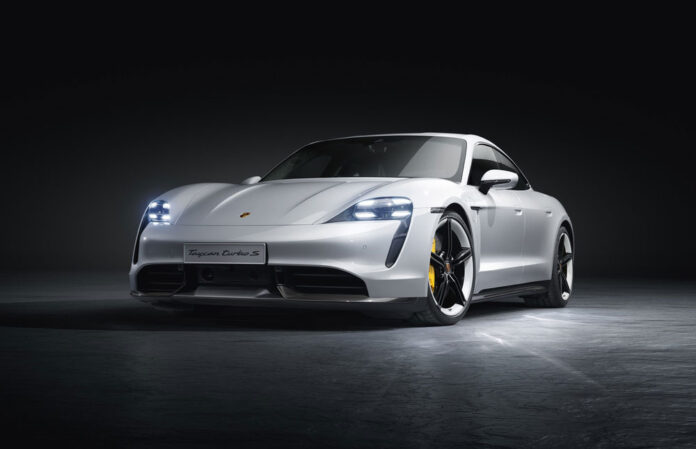
Porsche Taycan Front Brake Hose Recall: Pictured here is a gorgeous film-noirish White Taycan Turbo S, left-front, in studio. Credit: Porsche AG
Credit: Porsche AG

Porsche recalls the Taycan for a battery short circuit. Porsche recalls 193 certain 2020-2023-model-year Taycan electric vehicles.  Porsche also recalls 27,527 certain 2020-2024-model-year Taycan electric vehicles. The Porsche Taycan high-voltage battery may experience a short circuit within the battery module.  

Such a short circuit within the high-voltage battery module may thus increase the potential risk of a fire. 

Porsche Taycan High-Voltage Battery-Module Anomalies Recall — Summary of Details

Porsche constructed the initial subject 193 Taycan electric sedans, destined for the U.S. market, from November 07, 2019, through June 13, 2023, in Germany.  The affected VIN range runs from WP0AC2Y18LSA70247 through WP0AA2Y1XPSA17206 (193 units — not sequential). 

Porsche manufactured the subsequent subject 27,527 Taycan electric sedans, destined for the U.S. market, from October 21, 2019, through February 1, 2024, in Germany.  The affected VIN range runs from WP0AC2Y16LSA70165 through WP0AD2Y10RSA48040 (27,527 units — not sequential). 

RELATED: CHECK AMAZON PRICE — Playmobil Porsche Mission E Concept Car — 1:18-Scale Remote-Control Model

According to Stuttgart-Zuffenhausen-based Porsche and the National Highway Traffic Safety Administration (NHTSA), the specified short circuit within the high-voltage battery module could substantially increase the potential risk of a fire.  

Unfortunately, there are no known warning indicators on the dashboard to alert the driver of imminent danger. 

LG Energy Solution Wroclaw, of Kobierzyce, Poland, manufactured the potentially high-voltage battery modules in question.  It’s been bandied about that such recall flaws could lead to a “thermal event.”

Porsche began receiving alerts about this potential flaw on September 23, 2024.  Porsche then determined that “a safety-related defect exists in additional vehicles identified via data analytics and hardware analyses and decided to initiate these recalls.” 

For a List of More Porsche Recalls

Click here to peruse
Our StuttgartDNA Porsche Recall Guide

RELATED: CHECK AMAZON PRICE — Bburago Porsche Taycan Turbo S in Blue, 1:24-Scale

RELATED: CHECK AMAZON PRICE — Hot Wheels Porsche Taycan Turbo S in red, 208/250 Green Speed 4/5, 1:64-Scale

Porsche Taycan High-Voltage Battery-Module Anomalies Recall — Remedy

Dubbed in-house as NHTSA Recall No. 24V-731, the ARB5 Safety Recall of 193 vehicles involves Taycans with high-voltage battery modules.

A notification letter will be mailed to owners advising them that their interim solution will be to charge their batteries to a maximum or 80 percent as a stopgap measure to circumvent any potential short-circuiting in the battery cell modules.

Ultimately, though, the battery modules will have to be replaced as a final remedy.

As for the second recall, the NHTSA has bundled NHTSA Recall No. 24V-732 into two subsidiary ARB6 and ARB7 Safety Recalls of the 27,527 Taycan vehicles.

Porsche Cars North America (PCNA) designated ARB6 as Taycans for which there is insufficient battery data to date in order to assess whether there are anomalies, or not, in their modules.

ARB7 refers to vehicles that indicate sufficient high-voltage battery data evidencing no anomalies at all.

PCNA expects to send out owner notification letters via first-class mail to identified owners, on or about November 29, 2024.  The letter to owners will also advise that Porsche will extend a reimbursement for any pre-notification remedies. 

In the meantime, Porsche encourages owners to contact Porsche customer service at 1-800-767-7243 if further information is desired.  Be sure to reference Porsche Recall Nos. ARB5, ARB6 and ARB7 when calling.

PCNA stresses, however, that Taycans manufactured after April 3, 2024, are not impacted by ARB5, ARB6 and ARB7. Modules produced in cars built after this date are alleged to be produced with improved cell-production quality. If you say so…

Additionally, Taycan owners can contact the National Highway Traffic Safety Administration Vehicle Safety Hotline at 1-888-327-4236 (TTY 1-800-424-9153).  Owners can also go to www.nhtsa.gov/recalls, where they can punch in their vehicle’s VIN to see if their vehicle is affected, and/or to obtain the latest details.

Luftgekühlt 10 returns to the Universal Studios Backlot

0
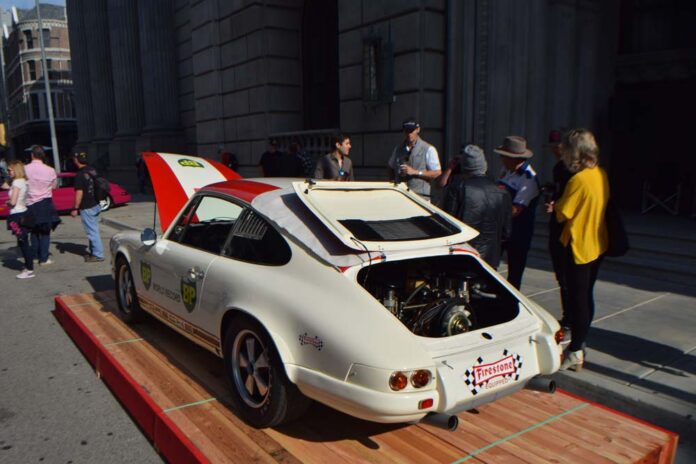
Luftgekühlt 10 returns to the Universal Studios Backlot: Depicted here is the outstanding restored BP Tony Callas BP Porsche 911 at Luft 6. Credit: StuttgartDNA
Credit: StuttgartDNA

After several Luft events in the interim, Luftgekühlt 10 returns to the Universal Studios Backlot.  Tickets for the Saturday, October 5, 2024, event went on sale today, starting at a hefty $95 per person.  Tickets are available online here

As was the case during previous events, owners of air-cooled Porsches will also be able to participate in Luft 10 by registering to display their cars here, if not already sold out. 

Luftgekühlt 10 returns to the Universal Studios Backlot: 917 beneath Luft 6 date marquee. Credit: StuttgartDNA
Porsche 917 poised on the Universal Backlot during Luft 6. Credit: StuttgartDNA

The first Universal Studios Backlot experience was air-cooled-Porsches-only Luftgekühlt 6.  It was staged among the legendary movie sets of Courthouse Square from “Back to the Future,” Western Town, Mexican Town and New York Street.

How Did Luftgekühlt 10 on the Universal Studios Backlot Become the Sequel to Luft 6?

The Luftgekühlt founders recently proclaimed that Luft 10 promises to be the most remarkable air-cooled Porsche gathering to date.  Again, it will celebrate only air-cooled Porsches from pre-A 356 to the 993 Porsche 911 sports-car series that ended in 1998. 

Luftgekühlt 10 returns to the Universal Studios Backlot: Pictured here is a perspective of displayed Porsche 911 sports cars on Main Street during Luft 6. Credit: StuttgartDNA
Hangin’ out in a “good movie” on the Backlot during Luft 6. Credit: StuttgartDNA

Renowned international Porsche personality Jeff Zwart, Luft’s Creative Director, announced, “Every good movie has a sequel, and it’s time for ours!”

Accordingly, Luft’s co-founder and former sole-American Porsche Motorsport team racer Patrick Long said, “We’re excited to finally announce the plans around our tenth annual event.  We’ve been looking at venues for many years with Luft 10 in mind, and all agreed the Universal Studios Backlot provided the most incredible and memorable setting for Porsche’s legendary road and racing cars.

“We always strive to create a stunning, fresh experience for visitors of all walks, and we’re confident everybody will be buzzed by what we’re going to create.  We’re looking forward to welcoming everybody back in October.”

Unofficially dubbing the event “Luft 10: The Sequel,” the founders strive to utilize the Universal Studios Backlot as a total re-invention of the original Luft 6, which took place on May 11, 2019. 

Luftgekühlt 10 returns to the Universal Studios Backlot: Pictured here are show spectators in the foreground of a "Porsche gas station" on the Backlot at Luft 6. Credit: StuttgartDNA
Gassing up and buying snacks at the “Porsche gas station” on the Backlot at Luft 6. Credit: StuttgartDNA

The founders plan to curate the movie sets, sound stages, city streets and studio backdrops — as the larger-than-life setting for Porsche’s legendary road and racing cars — with a fresh perspective to present loyal Luft fans with a uniquely new experience.

History of the Luftgekühlt Phenomenon

According to the creators of what is now recognized as the “Luftgekühlt Phenomenon,” their very first presentation had “its humble beginnings in the cramped parking lot at Deus Ex Machina in Venice, California back in 2014.” 

Luftgekühlt 10 returns to the Universal Studios Backlot: Pictured here is the 1981 Le Mans 1st-place-overall-winning Jacky Ickx & Derek Bell Porsche Type 936/81 at Luft 6. Credit: StuttgartDNA
The 1981 Le Mans 1st-place-overall-winning Jacky Ickx & Derek Bell Porsche Type 936/81 “in the pits” at Luft 6. Credit: StuttgartDNA

Since then, Luftgekühlt has celebrated air-cooled-only Porsche racing and road cars with a European Tour through Germany, Great Britain, Poland and Denmark.  Stateside, Luftgekühlt has presented similar shows in San Francisco and Indianapolis. 

Recently, Luftgekühlt’s Air | Water took place in Costa Mesa, in Southern California’s Orange County.  This represented a slight change in direction by including “step-children” water-cooled Porsche cars for the first time, along with the founders’ more-prized air-cooled Porsche cars. 

In any case, Luft 10 could be Luftgekühlt’s biggest event yet.  We shall see, shall we not? 

Luftgekühlt 10 returns to the Universal Studios Backlot: Depicted here is an early Porsche 911 in the "Back to the Future" Courthouse Square at Luft 6. Credit: StuttgartDNA
Chillin’ in the “Back to the Future” Courthouse Square at Luft 6. Credit: StuttgartDNA

Luft 10 Ticket and Lodging Information

Pedestrian tickets are available online here.  Again, general admission is $95 per spectator entry.  General-admission ticket holders can enter the venue beginning at 10 am.  The show is scheduled to conclude at 3 pm. 

Children 12 years and younger will need to hold children’s tickets to enter Luft 10, costing $0.00 per child —surprisingly, and pleasantly so.  But if your brood exceeds four urchins, then those extra kids of yours will need to stay home with a sitter. 

Parking passes are available online by clicking/tapping on “non-show parking” on the ticket webpage. Limited parking, if still available, will also cost you at the price of $25 per vehicle. 

Luftgekühlt 10 returns to the Universal Studios Backlot: Depicted here are Porsche 911 sports cars displayed along Backlot streets at Luft 6. Credit: StuttgartDNA
Strolling among Porsche 911 sports cars displayed along the Backlot streets at Luft 6. Credit: StuttgartDNA

Early-admission pedestrian ticket holders will have access starting at 8 am on the day of the event.  The purchase price includes a specialty hat, which will be mailed to such ticket holders prior to the affair.  In addition, all passengers in display cars will need to purchase an early-admission ticket. 

Oh, and the cost?  A whopping $195 — an extra 100-Benjamin for just 2 hours of earlier admission. 

All ticket purchases are final and non-transferable.  It also should be noted that Universal Studios’ security protocols require that the names of all ticket holders must be specified.  You must provide this information before completing your purchase.  Once provided, purchasers will be able to download tickets to one’s phone.

Only service animals will be allowed to attend with their owners.  So make arrangements to leave Fido at home with the left-out kids and sitter. 

The Hilton Los Angeles/Universal City is the official hosting hotel for Luft 10.  Accommodations can be obtained here.   

Enjoy!  See you there! 

Introducing the Porsche 911 Turbo 50 Years model

0
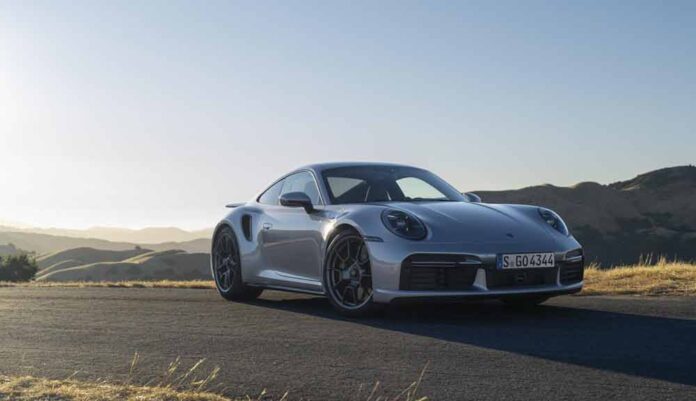
Introducing the Porsche 911 Turbo 50 Years model: Depicted here is a 911 Turbo 50 Years model, right-front, parked on a hilltop. Credit: Porsche AG
Credit: Porsche AG

Porsche just introduced its Porsche 911 Turbo 50 Years model.  If proven so worthy after its release, this commemorative car could very well be dubbed the Porsche 911 Turbo 50 Years “supermodel”— for, on paper it reads like a veritable ultimate dream machine, which is also not-so-subtly mirrored by its stratospheric price tag. 

What’s more, Porsche ballyhoos the 911 Turbo 50 Years model as combining “outstanding performance and the finest materials with exclusive design elements.”  So it stands to reason that Porsche’s new 2025 Turbo model could very well become today’s classic Seventies’ Christie Brinkley supermodel of Porsche sports cars. 

Long on name — but way short on affordability — the Porsche 911 Turbo 50 Years model is based on the last-generation 911 Turbo S introduced in 2019.  Production units of the 911 Turbo 50 Years sports car from Stuttgart-Zuffenhausen are limited to 1,974 specimens.  Why?  Speaking of the Seventies, this is because the 911 50 Years edition honors the year 1974 in which the first 911 Turbo — the fabled Type 930 — made its stellar debut.

Introducing the Porsche 911 Turbo 50 Years model: Depicted here is a 911 Turbo 50 Years model, left-front, tooling along a windy road. Credit: Porsche AG. Credit: Porsche AG
Credit: Porsche AG

According to Porsche, “The interior and exterior evoke historic 911 Turbo models, complemented by timelessly elegant and contemporary styling elements.”  Also on offer is an optional Heritage Design Package, which takes the aesthetic refinement of the anniversary model to the ultimate production plateau.

Porsche Weissach Development Center: 911 Turbo (Type 930 3.01) model year 1974. Credit: Porsche AG
911 Turbo (Type 930 3.01), model-year 1974. Credit: Porsche AG

History of the Porsche Turbo

As preface, a brief history of Porsche Turbo development is worth mentioning.  Porsche had been dabbling in turbocharger technology during its earlier racing heritage.  The first such race cars were the mighty 917/10 and 917/30 beasts of Porsche prototype yore. 

Then, in 1974, Porsche took their iconic Porsche 911 to a whole other level, the first Porsche production sports car to sport a turbocharger.  The famed Stuttgart-Zuffenhausen car manufacturer introduced what would become the gold standard and top-of-the-range model in the 911 model line — the Type 930 Porsche 911 Turbo. 

Pictured here is the unveiling of the Porsche 911 50 Years model alongside its predecessor Porsche 911 Type 930 during 2024's Monterey Car Week. Credit: Porsche AG
The unveiling of the Porsche 911 50 Years model alongside its progenitor Porsche 911 Type 930 during 2024’s Monterey Car Week. Credit: Porsche AG

Launched into the market as a model-year 1975, the Porsche 930 pushed the 911’s envelope to the next level and, as they say, the rest is history. 

The 930 distinguished itself from other 911 models by featuring flared rear wings.  This gave it an extra, shapely 12 cm in width.  The front edges of the rear-wheel arches received black stone guard film to protect the paint finish.  A distinctive rear wing with a wide black hard-rubber border soared above the rear lid.

VIDEO: 2024 Monterey Car Week

Unveiling of the Porsche 911 Turbo 50 Years model during 2024’s Monterey Car Week. Credit: News TV Porsche

Now the Porsche 911 Turbo 50 Years model’s time has arrived to shine. Just as the Type 930 looks as good as it did upon its Seventies debut, perhaps the would-be Turbo 50 Years “supermodel” — as the latest descendant of its Type 930 progenitor — will live on to keep looking as good as 70-year-old supermodel Christie Brinkley does today, as intimated in my introduction above.

Introducing the Porsche 911 Turbo 50 Years model: Pictured here on a scenic hilltop is a 911 Turbo 50 Years model, right-rear, at rest, overlooking the view. Credit: Porsche AG
Credit: Porsche AG

Exterior Styling Cues of the Porsche 911 Turbo 50 Years Model

Together, the Porsche 911 Turbo 50 Years anniversary model and its siring 2019 911 Turbo S pay tribute to and reimagine this rich Turbo heritage.  The standard side vinyl graphics echo the historic livery of the Porsche 911 RSR Turbo introduced at the Frankfurt Motor Show in 1973, itself a pedigree of the Type 930 911 Turbo.

Introducing the Porsche 911 Turbo 50 Years model: Depicted here is a 911 Turbo 50 Years model displaying its vinyl graphic "turbo" script. Credit: Porsche AG
Credit: Porsche AG

Turbonite, the chosen Porsche Turbo-exclusive color, makes its debut as a 911 paint color here.  Turbonite also accents the inlays in the rear engine cover, the fuel tank cap and in the Porsche Crest.  It also serves as a contrasting color in the Turbo 50 model logo.

Additionally, Porsche designers adorn the new Turbo model with Anthracite Grey as a historical reference on the following: 

  • Rear wing blade
  • Rear apron
  • Mirror base
  • Air intake trims
Introducing the Porsche 911 Turbo 50 Years model: Pictured here is a 911 Turbo 50 Years model's rear engine cover badging. Credit: Porsche AG
Credit: Porsche AG
Introducing the Porsche 911 Turbo 50 Years model: Depicted here is a 911 Turbo 50 Years Sport Classic wheel. Credit: Porsche AG.
Credit: Porsche AG

Other distinctive exterior styling features include: 

  • Badging on the rear engine cover which features a turbocharger icon and the engraved years “1974–2024”  
  • LED door projectors casting at night the image of a turbocharger onto the ground next to the car when the door is open  
  • 911 Turbo S Exclusive Design wheels in Turbonite as standard fitment
Introducing the Porsche 911 Turbo 50 Years model: Depicted here are the 911 Turbo 50 Years model's headrests and MacKenzie tartan seats. Credit: Porsche AG
Credit: Porsche AG

Interior Styling Cues of the Porsche 911 Turbo 50 Years Model

The 911 Turbo 50 Years designers successfully endeavored to imbue the interior with the prevailing spirit and taste and tenor of the 1970s.  With this goal in mind, they upholstered the center seat inlays and interior door panels in MacKenzie tartan as an exclusive homage to the early Porsche 911 Turbo models. 

This further serves as stark contrast to distinguish the new Turbo model from the preceding 911 Turbo S series-production model. 

Other Turbonite accents also embellish the…

  • Seat belts
  • Controls
  • Decorative stitching
  • Trim strips with decorative inlays in black leather
  • Porsche Crest on the GT sports steering wheel

Additional interior styling cues include…

  • An illuminated Turbo 50 logo
  • Door kick-plate features finished in black brushed aluminum
  • Adaptive Sports Seats Plus headrests embroidered with the Turbo 50 logo
  • An anniversary plaque in aluminum, bearing both the Turbo 50 logo and the individual limited-edition number of the sports car, poised above the glove compartment
Introducing the Porsche 911 Turbo 50 Years model: Pictured here is a 1974 911 Turbo 930 (f.g.) and a 911 Turbo 50 Years model with the optional Heritage Design Package (b.g.). Credit: Porsche AG
Credit: Porsche AG

Optional Heritage Design Package for Porsche 911 Turbo 50 Years Model

The historically inspired optional Heritage Design Package and its exclusive design and equipment features further evoke the 911 Turbo models of the 1970s.  Aventurine Green Metallic paintwork is the Heritage Design Package’s chosen base color.

As an alternative design option, both the standard 911 colors and Paint to Sample colors are also on offer.  

A premium stylistic graphic in White (with a satin finish) is available to enhance three elements:

  • Lollipop with individually selectable car numbers between 0 and 99
  • 50 years of Turbo logo
  • Porsche logo

For a more minimalistic vibe, deletes of some or all of the graphic elements can be ordered by those buyers who so desire it. 

Introducing the Porsche 911 Turbo 50 Years model: Depicted here is the 911 Turbo 50 Years model's gold "turbo 50" logo. Credit: Porsche AG
Credit: Porsche AG

Other Heritage Design Package styling cues include… 

  • The historic Porsche Crest from 1964 painted in Brilliant Silver and White (satin finish) on the: 
    • Front bonnet
    • Center caps of the Sport Classic wheels
  • The Turbo 50 and Porsche logos on the rubenesque rear are plated in gold
  • The Sport Chrono clock and the instrument cluster dials are finished in green

VIDEO: Celebrating 50 Years of the 911 Turbo

Superior Turbo-Trim Performance as Tribute to Historic 911 Turbo Models

In technological and performance terms, the Porsche 911 Turbo 50 Years model derives from the aforementioned current 2025 911 Turbo S.  

Specs include… 

  • 3.7 liter boxer engine with VTG-twin-turbocharging, producing 640 hp and 590 lb.-ft. of torque  
  • Curb weight of 3,649 lbs.
  • Power-to-weight ratio of 5.7 lbs. per hp
  • Accelerating from 0 to 60 mph in 2.6 seconds [!]
  • 8-speed dual-clutch transmission (PDK)
  • Porsche Traction Management (PTM) active all-wheel drive
  • Porsche Torque Vectoring Plus (PTV Plus)
  • Sport exhaust system with black tailpipes
  • Porsche Active Suspension Management (PASM) sport suspension with a 10 mm lower ride height
  • Front-axle lift system
  • Tinted LED Matrix design headlights with Dynamic Light System Plus
  • Black-finish brake calipers with standard PCCB brake system
Depicted here is a 911 Turbo 50 Years model chronograph. Credit: Porsche AG
Credit: Porsche AG

Chronograph from Porsche Design Based on the 911 Turbo 50 Years Model

Porsche Design Timepieces will release a distinctive chronograph in homage to the Turbo anniversary model.  The watch is exclusively available only to the purchasers of the 911 Turbo 50 Years model.  The chronograph showcases the COSC-certified Porsche Design WERK 01.200 movement with fly-back function.  

Not unlike the vehicle, the watch is also limited to 1,974 units.  It interlaces classic design with modern technology.  Its Turbonite-accented black dial makes for a perfect identical likeness of the car’s dashboard timepiece.

Fashioned from black vehicle leather with decorative Turbonite stitching, the timepiece’s strap sports a folding clasp.  The chronograph’s transparent underside case grants a view of the winding rotor, which is scrupulously in the same style as the wheels of the 911 Turbo 50.  

The limited-edition number engraved on the titanium housing is identical to the limited-edition number of the matching 911 Turbo 50 Years model.  A Heritage Design Package special edition of the chronograph is also on offer.

Introducing the Porsche 911 Turbo 50 Years model: Depicted here is a 911 Turbo 50 Years model's rubenesque rear end ambling on down the road. Credit: Porsche AG
Credit: Porsche AG

Pricing and Availability of the Porsche 911 Turbo 50 Years Model

The limited-production anniversary Porsche 911 Turbo 50 Years model can now be ordered immediately.  MSRP adds up to a stratospheric $261,100, excluding the usual $1,995 for delivery, processing and handling.  

Thus the new Porsche 911 Turbo 50 Years model comes at a substantial premium — about $30,000 over and above the base 911 Turbo S.  Units are expected to roll in to U.S. Porsche Center dealerships in late 2024.

Porsche Cayenne Control-Arm Recall

0
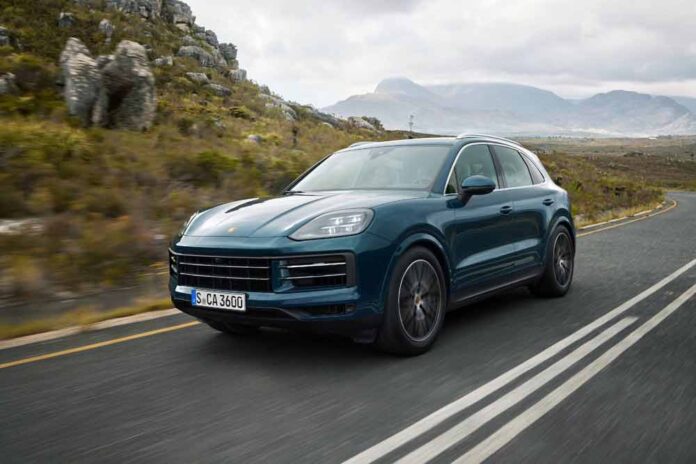
Porsche Cayenne Control-Arm Recall: Seen here is a 2024 Cayenne, left-front, on highway. Credit: Porsche AG
Credit: Porsche AG

Porsche recalls 2,475 certain 2024-model-year Cayenne vehicles. The SUVs in question were assembled at the Volkswagen Group’s Bratislava, Slovakia, plant between May 9, 2024, and June 9, 2024. Specifically, the recall concerns the driver-side front-axle upper-left control arm.

Porsche Cayenne Control-Arm Recall — Summary of Details

According to Porsche and the National Highway Traffic Safety Administration (NHTSA), the subject control arms may have been installed with cracks. In turn, this can result in the front-axle control arm breaking, thus causing unexpected loss of steering and wheel control.

RELATED READ: Porsche Cayenne: the new 2024 Cayenne roll-out

THK Rhythm Automotive in Czechia (Czech Republic) produced the affected control arms, which could fail as a result of subpar raw material sourced during the forging process.  Fortunately, this potential flaw was brought to Porsche’s attention in June 2024 before any reported actual failures.   

For a List of More Porsche Recalls

Click here to peruse
Our StuttgartDNA Porsche Recall Guide

Porsche Cayenne Control-Arm Recall — Remedy

Porsche assures concerned owners that all Porsche Cars North America (PCNA) dealers will inspect and replace the driver-side left upper control arm as necessary, free of charge.  Dealers will be advised officially of this recall and remedy on or about July 31st.

PCNA expects to mail out owner notification letters via first-class to identified owners on or about September 13, 2024, informing them of the Porsche Cayenne control-arm recall.

In the meantime, Porsche encourages owners to contact Porsche customer service at 1-800-767-7243 for further information.  Be sure to reference Porsche Recall No. ARB2.

Porsche Taycan Front Brake Hose Recall

0
Porsche Taycan Front Brake Hose Recall: Pictured here is a gorgeous film-noirish White Taycan Turbo S, left-front, in studio. Credit: Porsche AG
Credit: Porsche AG

Porsche recalls 31,689 certain 2020-2024-model-year Taycan electric vehicles.  The Porsche Taycan front brake hose recall concerns the hoses possibly developing cracks.  Such cracks could ultimately leak brake fluid. 

If brake-fluid leakage should occur, braking performance may decline and thus extend the braking distance required to stop the vehicle.  Ultimately, this increases the risk of a collision. 

Porsche Taycan Front Brake Hoses Recall — Summary of Details

Porsche constructed the subject Taycan electric sedans, destined for the U.S. market, from October 21, 2019, through June 13, 2024, in Germany.  The affected VIN range runs from WP0ZZZY1ZLSA65780 through WP0AA2Y11SSA08287, inclusive. 

RELATED: CHECK AMAZON PRICE — Playmobil Porsche Mission E Concept Car — 1:18-Scale Remote-Control Model

According to Stuttgart-Zuffenhausen-based Porsche and the National Highway Traffic Safety Administration (NHTSA), the subject front leaky brake hoses could result in diminished braking performance, thus lengthening the vehicle’s stopping distance. Consequently, the risk of a crash greatly increases. 

As a possible preliminary leakage warning of imminent failure, warning indicators on the dashboard may alert the driver with “low brake fluid” and “PSM [Porsche Stability Management] Failure” illuminated messages. 

Valeo Powertrain Systems Driveline, of Ebern, Germany, manufactured the potentially defective brake lines in question. 

Porsche began receiving alerts about these potential flaws and brake-hose leakage incidents in June 2023.  To date, only seven (7) instances in the United States have been reported to Porsche.  However, one actual accident did occur abroad, with no reported injuries, thankfully. 

Thus Porsche promptly initiated a variety of optical analyses, bench tests and burst-pressure testings of the front brake hoses.  Porsche also studied various design issues.  One such major investigated design feature was the brake hose length and mounting.  Obviously the collective goal was to determine the root cause of the defect. 

So, in an abundance of caution on June 12, 2024, Porsche concluded that a safety-related defect did in fact exist in the subject vehicles and immediately issued a safety recall.

For a List of More Porsche Recalls

Click here to peruse
Our StuttgartDNA Porsche Recall Guide

RELATED: CHECK AMAZON PRICE — Bburago Porsche Taycan Turbo S in Blue, 1:24-Scale

RELATED: CHECK AMAZON PRICE — Hot Wheels Porsche Taycan Turbo S in red, 208/250 Green Speed 4/5, 1:64-Scale

Porsche Taycan Front Brake Hoses Recall — Remedy

Porsche assures concerned owners that all Porsche Cars North America (PCNA) dealers will inspect and replace the front brake hoses, free of charge.  Dealers will be advised officially of this recall and remedy on or about July 3.

Newly installed front brake hoses with an increased bending radius will decrease the load on the front brake hoses, thus eliminating excessive stresses on the hoses, hence remedying the subject defect.  The new replacement brake hoses went into production on May 13, 2024. 

PCNA expects to send out owner notification letters via first-class mail to identified owners, on or about August 16, 2024.  The letter to owners will also advise that Porsche will extend a reimbursement for any pre-notification remedies. 

In the meantime, Porsche encourages owners to contact Porsche customer service at 1-800-767-7243 if further information is desired.  Be sure to reference Porsche Recall No. ARB0 when calling.

Additionally, Taycan owners can contact the National Highway Traffic Safety Administration Vehicle Safety Hotline at 1-888-327-4236 (TTY 1-800-424-9153).  Owners can also go to www.nhtsa.gov/recalls, where they can punch in their vehicle’s VIN to see if their vehicle is affected, and/or to obtain the latest details.

Death of the Porsche 911 Icon

0
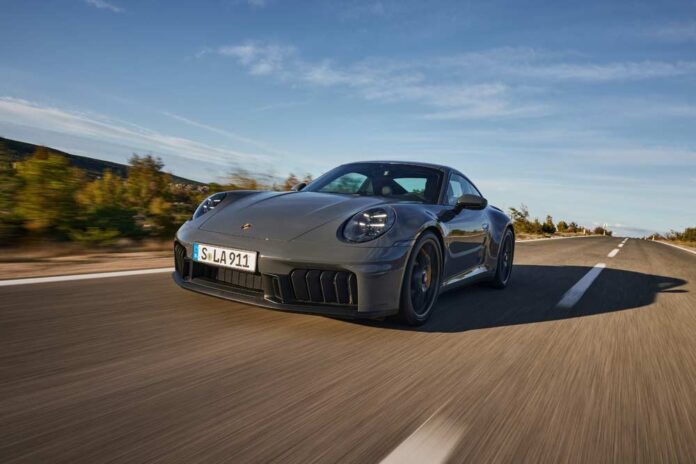
Death of the Porsche 911 Icon - depicted here is the Gray T-Hybrid on road, left-front. Credit: Porsche AG
Credit: Porsche AG

It may not be the very, very end of the iconic internal-combustion-engined Porsche 911 that we’ve known and loved since the Sixties — but it’s certainly the beginning of the bitter, inevitable slow death of that beloved all-ICE Porsche 911 icon by a thousand cuts. 

Sure, sure, the new 2025 Porsche 911 GTS continues to sport an internal combustion engine.  But Porsche finally capitulates to global “environmental” politics with the introduction of novel hybrid technology to its heretofore untouchable 911 icon. 

However, we must grudgingly concede, as well as commend, Porsche’s typically German engineering innovation and excellence in adapting to the prevailing irrational political winds of change. 

That said, let’s get started on a brief outline of the key facets of Porsche’s “innovative” 2025 911 GTS hybrid.  For more thorough, detailed info and specs, check any of the “First Look” articles about the hybrid 911 on the Internet.  For example, refer to the Porsche Club of America’s fine article here

For an even deeper technical dive, it is imperative that you check out venerable automotive editor and journalist Csaba Csere’s pithy, cogent technical article for Car and Driver here

Death of the Porsche 911 Icon - depicted here is a Carmine Red door's t-hybrid script. Credit: Porsche AG
Credit: Porsche AG

T-Hybrid Technology vs. E-Hybrid Technology

  • Plug In vs. No Plug In
  • T-Hybrid Drivetrain

Plug In vs. No Plug In

Probably one of the first questions anyone may have about the new hybrid 911 is:  Do you have to plug in the damn, confounded hybrid Porsche 911 at a charging station? 

And just what, exactly, is meant by the “T-Hybrid” system that optimally suits the 911…allegedly?

The new 911 is propelled by what has been dubbed “T-Hybrid” technology — to distinguish it from the commonly known plug-in “Prius hybrid” system. 

Death of the Porsche 911 Icon - depicted here is the T-Hybrid drivetrain. Credit: Porsche AG
Credit: Porsche AG

T-Hybrid Drivetrain

For starters, the “T” in T-Hybrid stands for “turbo.”  So this is meant to distinguish the no-plug-in 911 Porsche hybrid system from your typically recognized plug-in hybrid drivetrain system, which is commonly known as E-Hybrid technology commonly found in the Toyota Prius and other plug-in hybrid cars. 

“We developed and tested various ideas and approaches to decide on a hybrid system that optimally suits the 911.  The result is a unique drivetrain that is well-integrated into the overall concept and enhances the performance significantly,” boasts Frank Moser, Vice-President of the 911 and 718 model lines.

RELATED — ICONIC 911 MEMORIAL KEEPSAKE: “The Complete Book of Porsche 911: Every Model Since 1964” by Randy Leffingwell

It should be noted that this new hybrid technology is being launched for the first time in only the Porsche 911 GTS variants, with other 911 trim lines to inevitably (read: dreadfully) follow.

So how does the “turbo” in T-Hybrid fit in to the grand scheme of things?  Please read on…

Death of the Porsche 911 Icon - pictured here is the T-Hybrid flat-six engine. Credit: Porsche AG
Credit: Porsche AG

New 3.6-Liter Flat-Six Engine and its Single (?!) Turbo

  • The New 992.2 Engine 
  • Single Beefy Turbocharger
  • But Where’s the Waste Gate?

The New 992.2 Engine

The new 3.6-Liter 992.2 engine of the 2025 Porsche 911 GTS T-Hybrid is the first 9A3 engine.  This is the latest evolutionary iteration of the original 2009 Porsche DFI (Direct Fuel Injection) engine. 

The engine is freshly developed and is a larger 3.6 liter six-cylinder boxer engine, in contrast to the Carrera’s 3.0-liter engine. 

RELATED — ICONIC 911 MEMORIAL KEEPSAKE: “Porsche 911: The Ultimate Sportscar as Cultural Icon” by Ulf Poschardt

By itself, the new boxer engine develops 478 hp (357 kW) and 420 lb.-ft. of torque. The total system power is 532 hp (398 kW) and 449 lb.-ft. The power increase compared to the previous 911 Carrera GTS models is 59 hp (45 kW).

According to Porsche, the new 911 Carrera GTS Coupe accelerates from 0 to 60 mph in 2.9 seconds – 0.3 second speedier than before – with a top track speed of 194 mph.

Death of the Porsche 911 Icon - depicted here is the T-Hybrid electric turbo. Credit: Porsche AG
Credit: Porsche AG

Single Beefy Turbocharger

We’ve gotten used to twin turbos powering most latter-day Porsche cars, 911 and non-911 vehicles alike.  Such twin turbos were introduced originally for the sake of fuel economy in response to the growing insanely irrational political winds of change. 

But now, to spice things up in this instance, the T-Hybrid’s turbo isn’t about fuel economy at all (okay, maybe just a little bit) — rather, the 911 T-Hybrid’s turbo is about performance.  And instead of twin turbos, a newfangled beefy single turbo debuts here as one of the 911-hybrid stars of the show. 

RELATED — ICONIC 911 MEMORIAL KEEPSAKE: “Original Porsche 911 1964-1998” by Peter Morgan

But why only a single turbocharger in the new 911 T-Hybrid drivetrain?  That’s because the new single turbocharger — supplied by Borg-Warner as have been Porsche’s previous turbos — was developed to be electrically driven to all but eliminate the traditionally existent “turbo lag” inherent in Porsche turbo cars since the 1980s. 

But how can “turbo lag” really be eliminated, ask the purists and skeptics? 

The New Turbo’s Electric Motor

The T-Hybrid single turbo sports a new integrated electric motor.  This novel 14.7-horspower motor is situated on the turbo’s shaft between the compressor wheel and the turbine wheel, where it revs up the turbocharger lickety-split to pump up the boost. 

This, ideally, eradicates that dreaded turbo lag from days of Porsche turbo yore — at least on the drawing board.  That is, Porsche boasts that the single turbo achieves a peak boost in 0.6 second — in stark contrast to the approximately 3 seconds produced by the twin-turbo 992.1 GTS.  So it remains to be seen whether this is fact or fanciful fiction under real-world conditions. 

RELATED — ICONIC 911 MEMORIAL KEEPSAKE: “The Porsche 911 Book” by Rene Staud

Curiously, the turbocharger’s electric motor also operates as a generator, which can produce up to 15 hp (11 kW) using the exhaust gas stream. 

In addition, another one of Porsche’s boasts is that the single turbocharger is alleged to recuperate energy.  On top of that, said energy is supposedly preserved and transmitted to the battery. 

But how is the new Porsche 911 GTS T-Hybrid going to deliver on this lofty promise?  Stay tuned.  It remains to be seen. 

But Where’s the Waste Gate?

Surprisingly, any semblance of a waste gate is apparently relegated to extinction.  Because of the unique T-Hybrid configuration, the waste gate is rendered useless. 

It is rendered useless because now the waste gate no longer has to regulate the amount of boost to protect the engine as in past unique Porsche 911s.

RELATED — ICONIC 911 MEMORIAL KEEPSAKE: “Porsche 911: 50 Years” by Randy Leffingwell

This is ingenious because with the innovative set-up, any surplus power is no longer wasted but instead is indeed conserved to charge the battery or energize the electric motor. 

The ultimate objective is to improve throttle response and performance.  Do you believe…?

Death of the Porsche 911 Icon - depicted here is a black Cabriolet T-Hybrid, at dockside, left-front. Credit: Porsche AG.
Credit: Porsche AG.

“Electrification” is the 911 T-Hybrid’s Order of the Day

  • In-Transmission Electric Motor
  • Not One, But Two, Electric Batteries
  • Electric Air Conditioning And Electric Power Steering

In-Transmission Electric Motor

The novel electric traction motor can produce up to 53 horsepower and 110 pound-feet of torque.  It is positioned within the 8-speed PDK transmission’s bellhousing. 

Serving double duty as a veritable starter, it thus eliminates the need for a traditional belt-driven starter as we know it (also see air conditioner and power steering below). 

Not One, But Two, Electric Batteries

The new Porsche 911 GTS T-Hybrid sports an allegedly harmonious duet of batteries, according to Porsche. 

The first one is a compact 400-volt, 1.9kWh battery.  It has been placed where the conventional 12-volt battery is normally located, i.e., between the windshield and frunk. 

The complementary 12-volt lithium ion battery is located behind the car’s aft parcel shelf.  This oppositional placement of the two batteries is intended to optimize weight distribution. 

Electric Air Conditioning and Electric Power Steering

The Porsche 911 T-Hybrid GTS is thus now beltless, meaning that it employs electric air conditioning and power steering without the need for belts to run them. 

This space savings paves the way for the mounting of DC-DC converter, pulse inverter and intercooler on top of the engine — yielding a clearance of about 4.5 inches in the assembly’s height. 

No belt drive?  So then what drives the water pump?  There is no conventional water pump, per se.  Instead, the water pump is integrated within the engine itself.    

Death of the Porsche 911 Icon - depicted here is a Carmine Red Targa T-Hybrid at shoreside, left side. Credit: Porsche AG
Credit: Porsche AG

2025 Porsche 911 Carrera GTS T-Hybrid Pricing

MSRP does not include tax, title, registration, dealer charges or a $1,995 delivery, processing and handling fee.

• 2025 Porsche 911 Carrera GTS: $164,900

• 2025 Porsche 911 Carrera GTS Cabriolet: $178,200

• 2025 Porsche 911 Carrera 4 GTS: $172,700

• 2025 Porsche 911 Carrera 4 GTS Cabriolet: $186,000

• 2025 Porsche 911 Targa 4 GTS: $186,000

The World Premiere of the New Porsche 911

Conclusions and Takeaways on the Death of the Porsche 911 Icon

So.  I’ve given you a sketch of (i.e., sketchy) details of the all-new electric Porsche 911.  So you decide what you think of it. 

I know, I know, I just fudged a bit by calling it the “electric” Porsche 911. 

But who are we kidding?  With Porsche declaring recently that all models will be all electric, the end is near for ALL ICE Porsche vehicles as we know them. 

Thus we — as faithful Porsche devotees and, more importantly, high-paying customers — have all been let down by Porsche. 

Since there is no other superior marque to which to segue, we are all relegated to purchasing pre-owned air-cooled and water-cooled Porsches.  

RELATED — ICONIC 911 MEMORIAL KEEPSAKE: “IconiCars Porsche 911” by Rene Staud

So the market for those increasingly prized Porsches are likely to skyrocket out of sight because of Porsche’s incredible decision to phase out all ICE Porsches. 

While the newly introduced Porsche 911 GTS T-Hybrid has been spirited in under the radar as a “timid” electric vehicle, the fact remains that the iconic 911 is dying its death by a thousand cuts. 

The latest headlines presage that unsold electric vehicles are clogging automobile showrooms and lots with fewer and fewer buyers in sight. 

So hopefully this might compel Porsche to course-correct by delaying their total elimination of revered internal-combustion Porsche engines, as revealed recently. 

With a bit of luck, Porsche’s caving in to global climate-change pressures will meet with some future resistance in the wake of EV sales trending downward of late. 

We can dream, can’t we…?

US Open Champion Coco Gauff contests 2024 Porsche Tennis Grand Prix

0
US Open champ Gauff at the Porsche Grand Prix: Depicted here is US Open champ Gauff at the Porsche Grand Prix poised behind the net. Credit: Porsche AG
Credit: Porsche AG

US Open reigning champion Coco Gauff next eyes the ultimate prize at the 2024 Porsche Tennis Grand Prix.  After winning the 2023 US Open, the 19-year-old American now focuses like a laser beam on the coveted tennis crown — to become world No. 1.  On her next stop on the way to the very top, Ms. Gauff will contest the Porsche Tennis Grand Prix scheduled from April 13 to 21, 2024, at Stuttgart’s famed Porsche Arena.

Markus Günthardt, Tournament Director of the Porsche Tennis Grand Prix, voices his pleasure in Ms. Gauff’s participation in the tournament.  Mr. Günthardt offers, “First of all, she’s a player I love watching.  And secondly, we’ll be hosting all four reigning Grand Slam champions.”

The exclusive quartet of reigning Grand Slam champions participating in the Porsche Tennis Grand Prix are…

  • Iga Swiatek — French Open 2023 
  • Marketa Vondrousova — Wimbledon 2023
  • Coco Gauff — US Open 2023 and 
  • Aryna Sabalenka — Australian Open 2024

Additional world-class players in the Porsche Tennis Grand Prix field include…

  • Porsche Brand Ambassador Angelique Kerber
  • Porsche Brand Ambassador Emma Raducanu and
  • Jelena Ostapenko

Ms. Gauff enthused, “I am excited to kick off the clay court swing in Stuttgart.  I have had a lot of success on the clay, and I think Stuttgart provides the perfect week with great hospitality to start the European season,” says Coco Gauff. “The Porsche Tennis Grand Prix is still a tournament I can improve on and I am up for the challenge!”

Start of the Coco Gauff March to Earning Tennis World No. 1

On her journey to the Porsche Tennis Grand Prix, some of Coco’s stepping stones along the way to pursuing tennis no. 1 include…

  • Winning start to the 2024 season, successfully defending her title in Auckland
  • Reaching the semifinals at the Australian Open
    • ultimately yielding to winner Aryna Sabalenka 
    • but setting the record for the fastest serve — 125 mph (201 km/h)

Coco Gauff Biography

Cori Dionne “Coco” Gauff was born in Delray Beach, Florida, on March 13, 2004, to her proud parents, who were both successful athletes in their own right.  Father Corey Gauff played basketball at Georgia State.  Mother Candi Gauff was a track and field athlete and artistic gymnast at Florida State University.

Coco Gauff Singles Tennis Championship Milestones

Superstar tennis sisters Serena Williams and Venus Williams were early powerful inspirations for Ms. Gauff.  In fact, she was only six-years-old when, for the very first time, champing at the bit, she took to a tennis court to begin her journey.  

After training very hard since then, Ms. Gauff first competed in the 2017 US Open juniors — at only 13 years old — becoming the youngest finalist in tournament history.  Amazingly, just one year later, Mr. Gauff conquered the French Open.  This earned her the Junior World No. 1 title.

Then Ms. Gauff achieved another winning milestone.  She won her first WTA title in Linz in 2019.  Incredibly, to the day, she was only 15 years and 214 days old.  Before her, the youngest winner on the WTA Tour was Nicole Vaidisova, who won in Tashkent in 2004.  That drought lasted for an entire 15 years before Ms. Gauff reaped this achievement.  

Next she set another record at the French Open.  She achieved her first Grand Slam Final, against Iga Swiatek.  Once again, before her, the youngest winner to achieve this was current Porsche Ambassador Maria Sharapova at Wimbledon, again in 2004. 

But Ms. Gauff’s latest and greatest achievements occurred in rapid succession in the 2023 season.  Under the tutelage of former world class player Brad Gilbert, she racked up win and win after win in Auckland, Cincinnati, Washington D.C. and Queens, New York at the US Open.  Thus she broke into Top 10 for the first time on September 12, 2022.  Weighing in at 121 lbs. within a height of 5 ft. nine ins., she is the current world No. 3, having accumulated seven singles titles.

Coco Gauff Doubles Tennis Championship Milestones

Ms. Gauff’s successes in doubles are even more outstanding.  She has garnered an impressive eight tournament victories, among them…

  • First doubles Grand Slam final with fellow American Caty McNally at the 2021 US Open
  • Doubles final with fellow American Jessica Pegula at the 2022 French Open
  • 2023 WTA 1000 tournaments in Doha and Miami with Jessica Pegula
  • At the head of doubles rankings in September 2023

Other Coco Gauff Highlights

Season Kickoff

She kicked off her winning season garnering the top title at the ASB Classic.  Unfortunately, she fell just shy in some other tournaments during the season.  She did, in any case, make an impressive semi-final appearance in the Australian Open. 

Indian Wells Open

Ms. Gauff is scheduled to contest the BNP Paribas 2024 Indian Wells Open on March 9, 2024, in Indian Wells, California.  Her goal is to become the first American woman to clinch the singles tournament win since Serena Williams achieved this in 2001. 

Vogue Magazine Cover and Cover Story

Coco appears on the cover of Vogue magazine’s April 2024 issue.  The photo shoot was orchestrated by none other than famed celebrity photographer Annie Leibovitz.  Ms. Gauff is also the subject of the top Vogue cover story inside the magazine as profiled by Abby Aguirre. 

Mystery Boyfriend

Finally, on a less-serious note, there’s been some hubbub and gossip of late surrounding Ms. Gauff’s “mystery boyfriend.”  Up to this point, she has been very discreet about her private romantic life since ascending to status of global sports icon.  Hence the rumors about her mystery boyfriend.

In the aforementioned Vogue piece, she played down the rumors that she’s dating American tennis protégé Ben Shelton.  She intimated to Vogue that “He’s a very nice guy.  He’s in school now.  He’s about to apply for music school.  He wants to be an actor and he plays the guitar.

“I won’t respond and confirm if it’s him or not, but they caught me in the comments, so they know. Some people thought it was someone in tennis and that couldn’t be further from the truth.” 

We report, you decide, to borrow a turn of phrase… 

Previous Appearances in the Porsche Tennis Grand Prix

Coco Gauff appeared to contest matches in the Porsche Tennis Grand Prix previously in both 2022 and 2023.  Her personal best in Stuttgart occurred during her first appearance.  She excelled in doubles with Chinese tennis star Shuai Zhang. 

So now her eyes are on the top prize of not only the ultimate singles title — but also the top prize of the Porsche sports car that comes paired with the singles title. 

Luftgekühlt creators unveil venue for Air | Water

0
Luftgekuhlt unveils AirWater venue - depicted here at Luft San Pedro are 911s seen from behind with palms in b.g. Credit: StuttgartDNA

The creators of Luftgekühlt, or Luft for short, recently unveiled the venue for their latest endeavor — Air | Water.  Their new, presumably annual, affair will strut the usual genuinely awesome air-cooled Porsche sports cars, we’re sure.  But now hopefully-as-awesome water-cooled Porsche models will be able to get in on the action too for the very first time — in Costa Mesa, California — on Saturday, April 27th, 2024. 

Perhaps because Southern California is one of the planet’s alluring epicenters of our Porsche “cult-ture,” Air | Water will debut within the conveniently located and most likely permanent setting of the Orange County Fairgrounds in Costa Mesa. 

Luftgekuhlt unveils AirWater venue: Depicted here at Luft San Pedro is an orange 911 with Luft script inscribed on boot. Credit: StuttgartDNA

Former Porsche factory racer Patrick Long is co-founder of the ever-popular Luftgekühlt, an annual event as mentioned showcasing only air-cooled Porsche sports cars over the past decade.  Hence the moniker “Luftgekühlt,” which is German Porsche parlance for air-cooled engines.  Unlike Air | Water, though, Luftgekühlt events are staged at a different venue each year.  

Luftgekuhlt unveils AirWater venue: Depicted here at Luft Universal City Studios is the Brumos orange 914 on a platform. Credit: StuttgartDNA

In recent interviews, Mr. Long, who was the only American on the Porsche factory team, revealed that he feels there is a demand, indeed a need, for the inclusion of later-model water-cooled Porsche cars and SUVs to accommodate and welcome newcomers into the Porsche fold. 

Luftgekuhlt unveils AirWater venue: Depicted here at Luft Universal City Studios is the Callas BP 911 poised on platform with its beautiful engine displayed. Credit: StuttgartDNA

Hence the blossoming genesis of the Air | Water maiden stand-alone event.  Such an expansion and variation on the Luftgekühlt theme promises to be even more thrilling. 

Luftgekuhlt unveils AirWater venue: Depicted here at Luft San Pedro is the No. 46 356 under chandelier. Credit: StuttgartDNA

Indeed, it also paves the way for greater inclusive accessibility.  This is especially the case for the newer generations of prospective Porsche fans coming on board.

Luftgekuhlt unveils AirWater venue: Depicted here at Luft San Pedro is the Le Mans white 1982 Philippe Salvet Porsche. Credit: StuttgartDNA

So hurry — like a 1982 Le Mans winner.  Click on air-water.com right away to check for spectator tickets while still available.  Unfortunately, tickets for showing off your beautiful Porsche in the highly anticipated show are already sold out. 

Porsche recalls 911 for windshields that may detach

0
Porsche Recalls 911 for Windshields that May Detach: Pictured here is a blue 911 Carrera 911 S Cabriolet, seen from the left-front, cruising effortlessly down the highway. Credit: Porsche AG

Porsche recalls 8,101 Porsche 911 cars whose windshields may detach in an accident.  The exposed 911 sports cars are strictly 992-gen models.  Affected 911s span model years 2020 through 2024 that were manufactured between July 8, 2019, and October 30, 2023. 

According to Porsche and the National Highway Traffic Safety Administration (NHTSA), the recall concerns the possibility that potential improperly secured front windshields and rear windows may detach in an accident.  Specific trim levels were not disclosed. 

Porsche 911 Windshield Detach Recall — Summary of Details

The recall stems from the potential faulty bonding of the car’s windshields and rear windows to the car body.  More precisely, the conditions at the time the adhesive was applied may be the underlying culprit.  

According to initial documentation obtained, the contact surfaces of the 911 models in question were not completely scrubbed of residue prior to factory installation.  Consequently, a weaker, compromised adhesive bonding between the contact surfaces may be the result.

The problem first surfaced last November 2023 when Porsche was notified about “optically impaired windows in the field.” 

Further inspection revealed that, at these weaker adhesive contact points, the windshield and rear window, supplied by UK-based Pilkington San Salvo, posed the risk of becoming partially detached.  In addition, closer scrutiny revealed potassium salt bath residues in the primer area, which may have compromised normal adhesion.

Worst case scenario, these compromised bonds could catastrophically detach in an accident — especially the front windshield during an airbag deployment event. 

Recall documentation specified that fifteen (15) warranty claims were issued for 911 sports cars.  That is, these instances shared evidence in common of “cloudy surfaces or other optical deficiencies.”  

However, Porsche states that there have been no reports of actual glass detachments, nor of any injuries or accidents related to this recall. 

The Stuttgart-Zuffenhausen auto manufacturer does warn of excessive cockpit moisture or wind noise, which could be indicative of problematic glass adhesion. 

For a List of More Porsche Recalls

Click here to peruse
Our StuttgartDNA Porsche Recall Guide

Porsche 911 Detached Windshield Recall — Remedy

Porsche assures concerned owners that all Porsche Cars North America (PCNA) dealers will inspect and replace the windshield and rear window as necessary, free of charge. 

PCNA expects to mail out owner notification letters on or about April 26, 2024.

In the meantime, Porsche encourages owners to contact Porsche customer service at 1-800-767-7243 for further information.  Be sure to reference Porsche Recall No. ARA3.

Additionally, 911 owners can contact the National Highway Traffic Safety Administration Vehicle Safety Hotline at 1-888-327-4236 (TTY 1-800-424-9153). Owners can also go to https://www.nhtsa.gov/recalls, where you can punch in your car’s VIN to see if your car is affected or for the latest details.

Porsche recalls 911 for seat-belt retractor issues

0
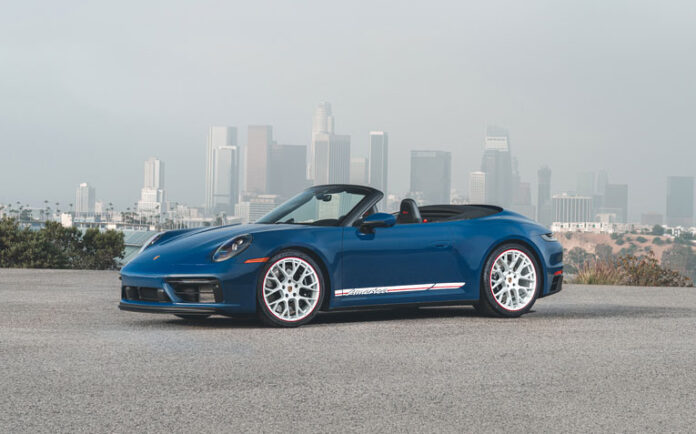
Porsche recalls 911 for seat-belt retractor issues: Depicted here in this picturesque image is a Blue 911 GTS Cabriolet America set against the L.A. skyline above Dodger Stadium. Credit: Porsche AG

Porsche recalls 2023-model-year 911 vehicles for risky automatic locking seat-belt retractors.  According to Porsche and the National Highway Traffic Safety Administration (NHTSA), the recall focuses in on the back-seat retractors — which thus pose an even greater-than-expected risk by deactivating earlier than specified as originally designed:  Such failure would render an attached child restraint system unsecure, especially during a crash.  To date, 910 Porsche 911 sports cars are affected. 
Porsche recalls 911 for seat-belt retractor issues: Pictured here are Porsche 911 red rear seat belts in the back seat. Credit: Porsche AG
Credit: Porsche AG

Porsche 911 Automatic Locking Seat-Belt Retractor Recall — Summary of Details

In other words, the seat-belt automatic locking retractors (ALR) in the back seat may deactivate early, thus preventing the child restraint system from staying fastened properly.  Here, in the States, such a malfunction renders any recalled Porsche 911 sports car — aka Neunelfer — in material breach of and non-compliant with the requirements of Federal Motor Vehicle Safety Standard number 208, “Occupant Crash Protection.”

These are the ten (10) exposed 2023-model-year-only trim levels:

  • 911 Carrera
  • 911 Carrera S
  • 911 Carrera T
  • 911 Carrera GTS
  • 911 Carrera 4
  • 911 Carrera 4S
  • 911 Carrera 4 GTS
  • 911 Targa 4S
  • 911 Turbo
  • 911 Turbo S
Porsche recalls 911 for seat-belt retractor issues: Depicted here is the Porsche 911 Edition 50 Years Porsche Design, seen from its left-front. Credit: Porsche AG
Porsche 911 Edition 50 Years Porsche Design. Credit: Porsche AG

Also factored into the mix here is the Porsche 911 Edition 50 Years Porsche Design sports car. 

All aforementioned 992-gen sports cars were built in the Stuttgart-Zuffenhausen assembly halls from May 12, 2023, through June 29, 2023.

What are the nuts and bolts of the 911 automatic locking seat-belt retractor recall?

The released documents on the NHTSA’s webpages pertaining to the subject recall indicate the following basic facts:

  • Joyson Safety Systems Aschaffenburg GmbH supplied the back-seat three-point seat-belt assemblies
  • Porsche part numbers making up the seat-belt automatic locking retractor (ALR) assemblies are:
    • 992.857.805A
    • 992.857.805C
    • 992.857.806C
  • Porsche discovered the potentially defective seat-belt retractors sometime in January 2024

For a List of More Porsche Recalls

Click here to peruse
Our StuttgartDNA Porsche Recall Guide

Porsche 911 Automatic Locking Seat-Belt Retractor Recall — Remedy

On or about March 6, 2024, Porsche Cars North America (PCNA) dealerships learned of the imminent remedial steps needed to be taken.  Specifically, they were instructed to inspect both the left-side and right-side rear belt ALR assemblies.  If found to be defective, they resolved to replace both mechanisms. 

The solution to this problem has already gotten a head start.  Joyson Safety Systems reportedly took action to upgrade the ALR assembly jig around August 4, 2023.

Porsche is about to assure concerned owners that all Porsche Cars North America (PCNA) dealers will inspect and replace the rear three-point belts as necessary, free of charge. 

To that effect, Porsche expects to send out owner notification letters via first-class mail on or about April 19, 2024.

In the meantime, owners are encouraged, if desired, to contact Porsche customer service at 1-800-767-7243 for further information.  Be sure to reference Porsche Recall No. ARA2.

Owners are also able to contact the National Highway Traffic Safety Administration Vehicle Safety Hotline at 1-888-327-4236 (TTY 1-800-424-9153).  Alternatively, you can go to https://www.nhtsa.gov/recalls to punch in your car’s VIN to see if your vehicle is affected, or to get the latest details and information.